THE SCENE
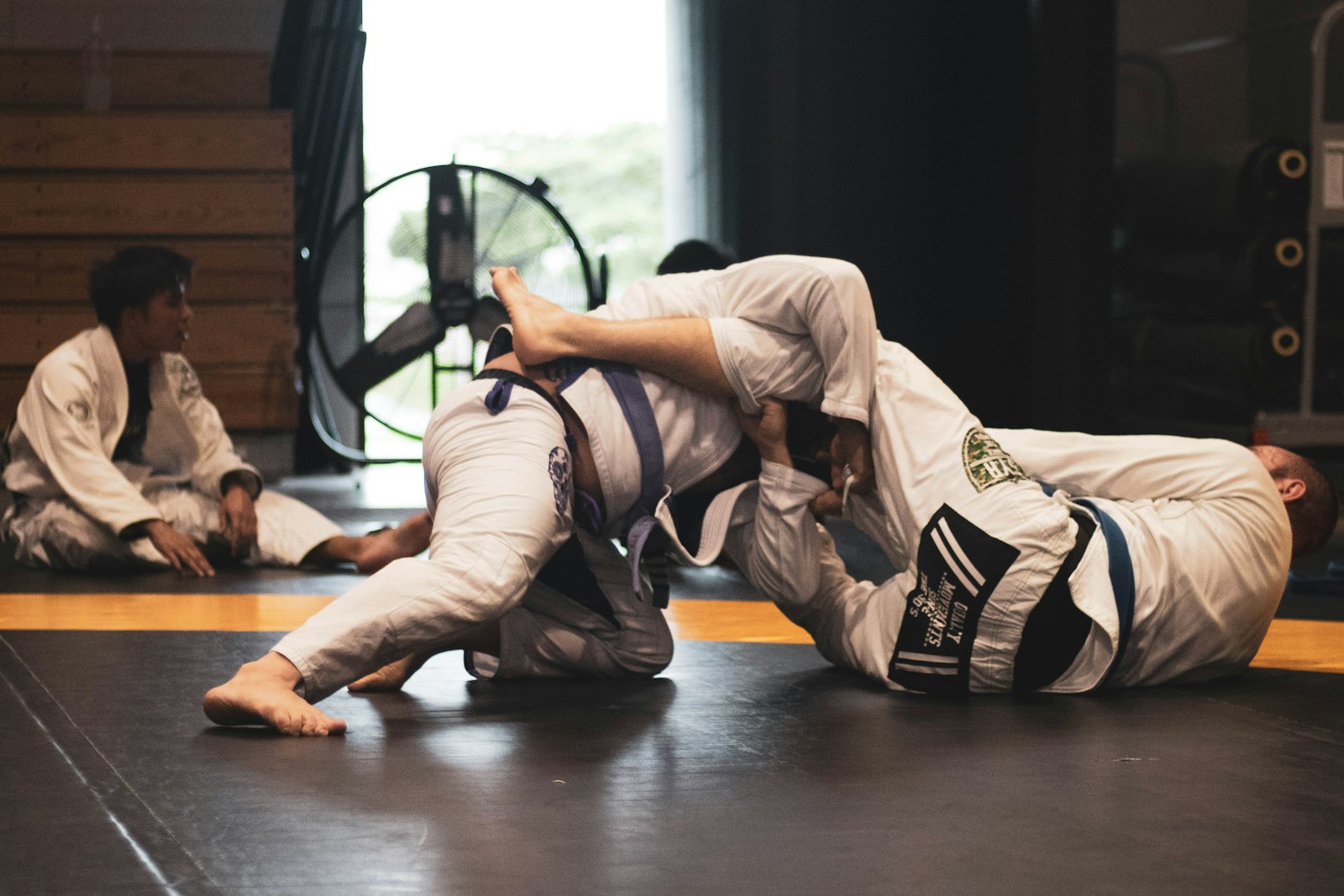
Tuesday, 11:17 AM. You're in side control.
You took a clean breakout off the open. Up 3R in eleven minutes. The kind of morning where your hands know what they're doing before your brain catches up. You feel light. Loose. Settled in.
This is the exact moment, on the mat, where a brown belt I rolled with for two years used to smile. Not because he was beating me. Because he could see what I was about to do. I was about to get greedy with the position I'd already won. I'd reach for the submission instead of holding the pin. He'd shrimp out, take my back, and I'd tap inside ninety seconds — having given up a dominant position I had earned across four minutes of perfect work.
The market does the same thing to you. It just calls the brown belt "the afternoon session."
THE CURSE
Why most blue belts quit
In Brazilian Jiu Jitsu there's a well-known dropout cliff. White belts don't quit... they're too new to know what they don't know, and every class is novel. Black belts don't quit... they've already paid the price. The people who quit are blue belts.
Blue belt is the phase where you know enough technique to have a game plan, but not enough to know your game plan is full of holes. You walk in with a strategy. You get smashed by a smaller, calmer purple belt who does three things well instead of thirty things adequately. You walk out wondering if you were ever any good at this.
Year two is the trading equivalent. You've read the books. You know what a clean setup looks like. You can name six order-flow tells and four ways to read a tape. And you cannot stop yourself from clicking the mouse when the setup isn't there. The gap between what you know and what you do has never been wider, and it is eating you alive.
The white belt loses money because he doesn't know better. The blue belt loses money because he does, and clicks anyway. One of those is fixable with study. The other isn't.
Nobody warns you that the most dangerous version of yourself is the one that just learned something new.
FLOW AND THE TRAP RIGHT AFTER
The submission you were never offered
Flow state is real. You've felt it. The morning where the chart talks to you, where size feels right, where you exit at the wick instead of after it. Athletes have it. Musicians have it. Traders have it on the mornings they shouldn't quit early but do anyway.
Here's what nobody who writes about flow state tells you: the most reliable predictor of a catastrophic afternoon is a perfect morning. You don't blow up on the mat when you're getting submitted. You blow up when you just hit a beautiful sweep, felt the room watching, and decided to chase a submission that wasn't there. Flow is followed by hubris with terrifying regularity. The professional's job is to notice the handoff and step away from the screen, the way a competitor steps off the mat between rounds.
I have a rule from my coach that I stole and pasted into my trading plan: after the best round of the night, drink water and sit down. Don't grab another partner. Don't try to prove the round wasn't a fluke. The round wasn't a fluke. The next one might be.
THE TAP
Your stop is information, not failure
The single biggest mental shift in BJJ is learning to tap early and tap often. New students refuse to tap. They tear ligaments because their ego won't let them admit a 19-year-old purple belt has their elbow hyperextended. Tapping is not losing. Tapping is paying tuition. You tap, you reset, you go again. The guys who tap freely become black belts. The guys who refuse become physical therapy patients.
Your stop loss is the tap. It is not the moment you failed. It is the moment the market told you something you needed to hear, and the cost of hearing it was small because you set the price in advance. Traders who refuse to take stops are exactly the white belts refusing to tap. They are not braver. They are just paying a much bigger bill later, and the bill comes due in equity instead of ligaments.
The reframes that actually work after five years of getting choked and five years of getting stopped:
- The tap is data. The stop is data. You paid for it — read it.
- You don't avenge a tap by rolling angrier. You don't avenge a stop by sizing up.
- The opponent you can beat is the version of yourself from yesterday, not the trader on Twitter with the screenshot.
- Skill is what's left when adrenaline leaves the room.
THE LONG GAME
What the brown belt knows
People ask me what changed between blue belt and brown belt. The honest answer is boring. I stopped trying to win every round. I started picking two positions and getting embarrassingly good at them. I learned to recognize, in the first ten seconds of a roll, whether I was calm or whether I was performing. If I was performing, I knew the round was already lost — I just hadn't gotten tapped yet.
Trading converged on the same answer. Two setups. A pre-market routine that's the same whether I slept eight hours or four. A daily loss limit that exists outside my discretion because in-the-moment me cannot be trusted to enforce it. A journal that catches the lie I tell myself about why I clicked. An external system, in other words, because the internal one fails exactly when it matters.
The mat has a coach yelling at you and a partner who will punish your sloppiness in real time. The screen has neither. The screen is the most permissive opponent you will ever face. It will let you do anything you want, right up until it takes everything you have.
That's the gap MAKETZO is built to close. Not with more education — you already have enough. With a structural layer that names the state you're in before you click, holds your loss limits when your discretion has left the building, and turns every red day into the kind of feedback a coach would give if you had one standing behind you. It's the corner in your corner. If you've been training alone in front of a screen for two years and getting tapped by the same submission every afternoon, that's not a knowledge problem. That's a system problem, and it has a fix.
Photo by Samuel Castro on Unsplash