THE THRESHOLD
The moment your plan stops being yours
7:12am. Coffee. You read your notes from last night. You know exactly which level you want, exactly how much you're risking, exactly where you're wrong. You feel like the version of yourself who writes good rules.
By the second red trade — call it 10:48 — that person is gone. Not metaphorically gone. Physically gone. The blood flow to the part of your brain that wrote those rules has measurably dropped, and the part that's running you now is the same part that flinches when a car swerves into your lane. You didn't break your rules. You stopped being the animal that wrote them.
For four years I thought the gap between my plan and my behavior was a character problem. It isn't. It's a chemistry problem with a character costume on.
WHY WELLNESS FRAMING FAILS
Meditation as a candle, not a tool
The reason most traders bounce off meditation is that it's been packaged for the wrong audience. The wellness version is about feeling good, being present, finding your center. None of that vocabulary survives a Tuesday where you're down 1.8R by 9:50.
So the trader tries it for a week, notices he doesn't feel particularly enlightened, concludes it's not for him, and goes back to white-knuckling his rules. Which works until it doesn't, which is usually around the third loss of the session.
You don't need to be centered. You need your cortisol curve to start the day low enough that the third loss doesn't push you over the line where your prefrontal cortex checks out.
That's the whole game. Not enlightenment. Not presence. Just keeping your stress chemistry under the threshold where the decision-making part of your brain stays in the room.
THE CURVE
What's actually happening at 10:48
Cortisol isn't an emotion. It's a hormone, and it follows a curve through the day that responds to what you do to yourself before the open and what the market does to you after. The curve has a ceiling — somewhere above it, your prefrontal cortex stops being the loudest voice and the limbic system takes over. The exact altitude is personal. But everyone has one, and most traders cross it before lunch on bad days without ever noticing.
Crossing it doesn't feel like crossing anything. It feels like "I just need to make it back." It feels like "this setup is obvious." It feels like the next trade is rational because the part of you that would have caught the rationalization is no longer at the desk.
This is why post-mortems read like science fiction. The trader sits down at 5pm, looks at the 10:53 entry, and genuinely cannot reconstruct what he was thinking. He wasn't thinking. He was reacting. The chemistry had crossed over and he was being driven by an older, faster, dumber operating system.
THE PRE-COMMITMENT
Front-loading the only variable you control
Here is the part nobody wants to hear. By the time you're staring at a chart and feeling the heat rise, it is mostly too late. You can take a breath, sure. You can step away. Those help at the margins. But the dominant variable in whether you cross the threshold today was already set before the open.
The dominant variable is where your curve started.
A trader who sits for twelve minutes before the bell, slow-breathes through his nose, and lets his heart rate settle isn't doing it because it's virtuous. He's doing it because he's lowering his floor. The same sequence of red trades that would push a 7:55-cortisol trader over the line at 10:48 doesn't push the pre-sat trader over the line at all. Same trades. Same losses. Different floor. Different ceiling clearance. Different behavior.
This is the hack. The whole hack. You can't control what the market does to your chemistry. You can control the altitude your chemistry starts at.
- Twelve minutes of slow nasal breathing before the open.
- No phone, no scanner, no premarket movers feed during it.
- Eyes closed or soft-focus on a single object. The point isn't visualization. The point is interrupting the sympathetic ramp that started the second you woke up and grabbed your phone.
- Done daily, not situationally. The benefit is cumulative; one good sit doesn't undo a week of arriving hot.
That's it. Nothing exotic. The reason traders don't do it isn't that it's hard. It's that it's boring and it doesn't feel like work. Trading culture rewards looking busy, and sitting still for twelve minutes looks like the opposite of preparation.
INFRASTRUCTURE, NOT DISCIPLINE
Why this has to be a system, not a vow
I've made the vow. Twice, actually. Both times right after blowing up. Both times it lasted about three weeks. Then a stretch of green days made the sit feel unnecessary, then a brutal Monday made the sit feel like a luxury I couldn't afford, then it was gone, then I was back at the desk arriving at 9:25 already keyed up and pretending that was fine.
The second blow-up taught me what the first one didn't. The practice isn't the problem. The practice is easy. The problem is that discipline-based practices decay in exactly the conditions you need them most. You need a structure that runs the practice for you on the days you'd rather skip — especially on those days, especially after green streaks, especially after red ones.
What I needed wasn't more willpower. I needed the sit to be a part of the platform I was already going to open at 7am anyway. I needed a room I walked into before the trading room, with a timer and a prompt and a record of whether I actually did it. Not a wellness app I'd forget about. A piece of trading infrastructure with the same status as my watchlist.
The room before the room
This is the entire reason MAKETZO's Focus Room has a Meditation Zone built into it — not bolted on as a self-care gesture, but staged as the room you pass through before the trading room opens. A short, structured pre-market sit. A log of whether you did it. A quiet feedback loop between the days you arrived prepared and the way you actually behaved when the third loss came.
It treats your nervous system the way a serious operation treats any other piece of critical equipment: warmed up, checked, and brought online before the bell — not improvised at 10:48 when you're already over the line. If you've been trying to white-knuckle your way to consistency and finding that the rules only work on the days you didn't need them, this is the infrastructure that turns the practice into something that actually survives a bad week.
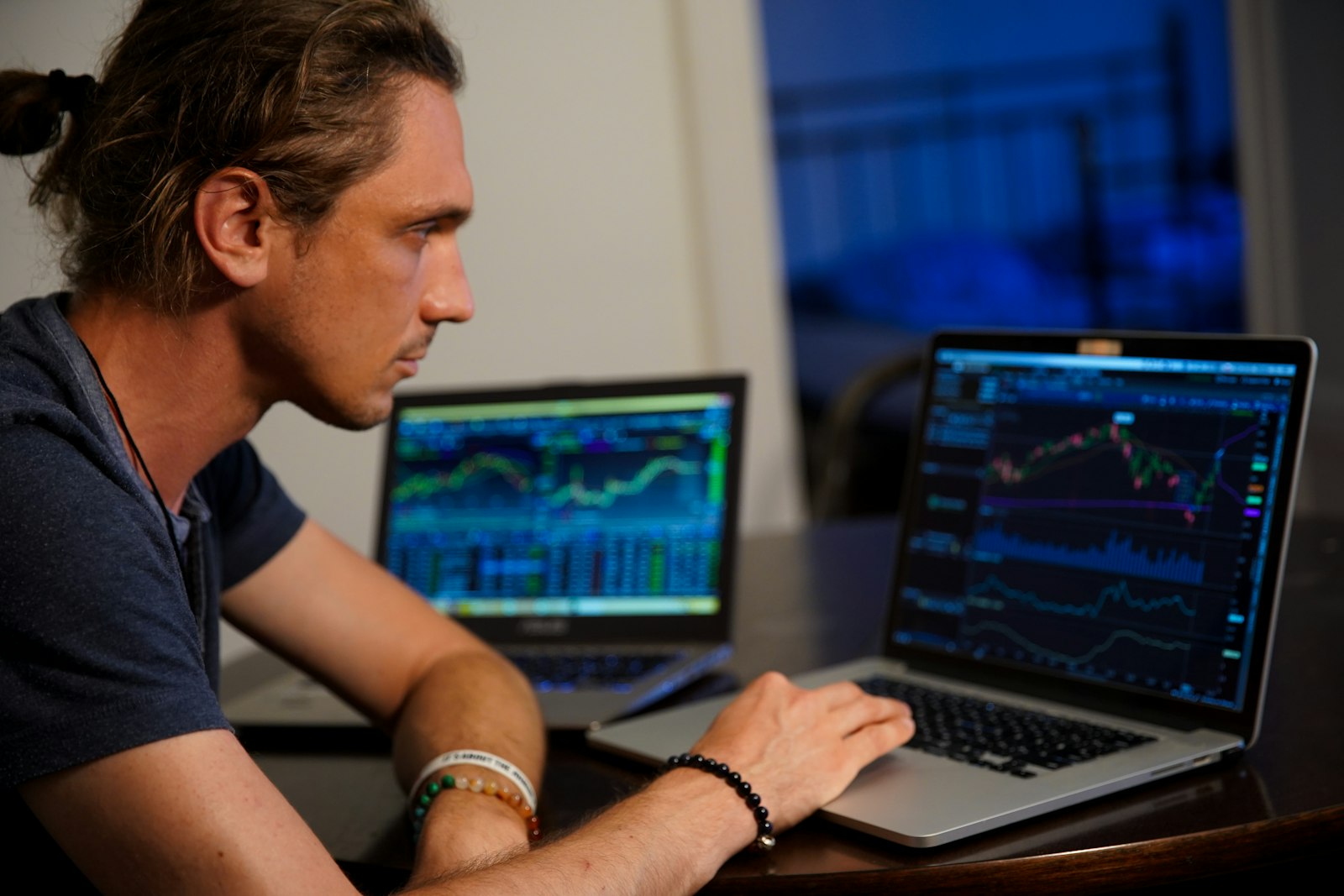
Photo by Adam Nowakowski on Unsplash