
Ask a consistently profitable trader what they did today. On most days, if they're being honest, the answer is: I watched.
That answer sounds lazy. It isn't. It's the whole job. The trader with the intact account at the end of the year is not the one who took every setup that looked pretty. She's the one who let ninety percent of the day pass without moving her hand toward the mouse. The rare skill isn't finding trades. It's rejecting them.
Nobody markets this because it doesn't sell. A course called "How To Take Two Trades A Week" would starve. So the culture pretends the work is in the entries, when the work is actually in the entries you didn't take.
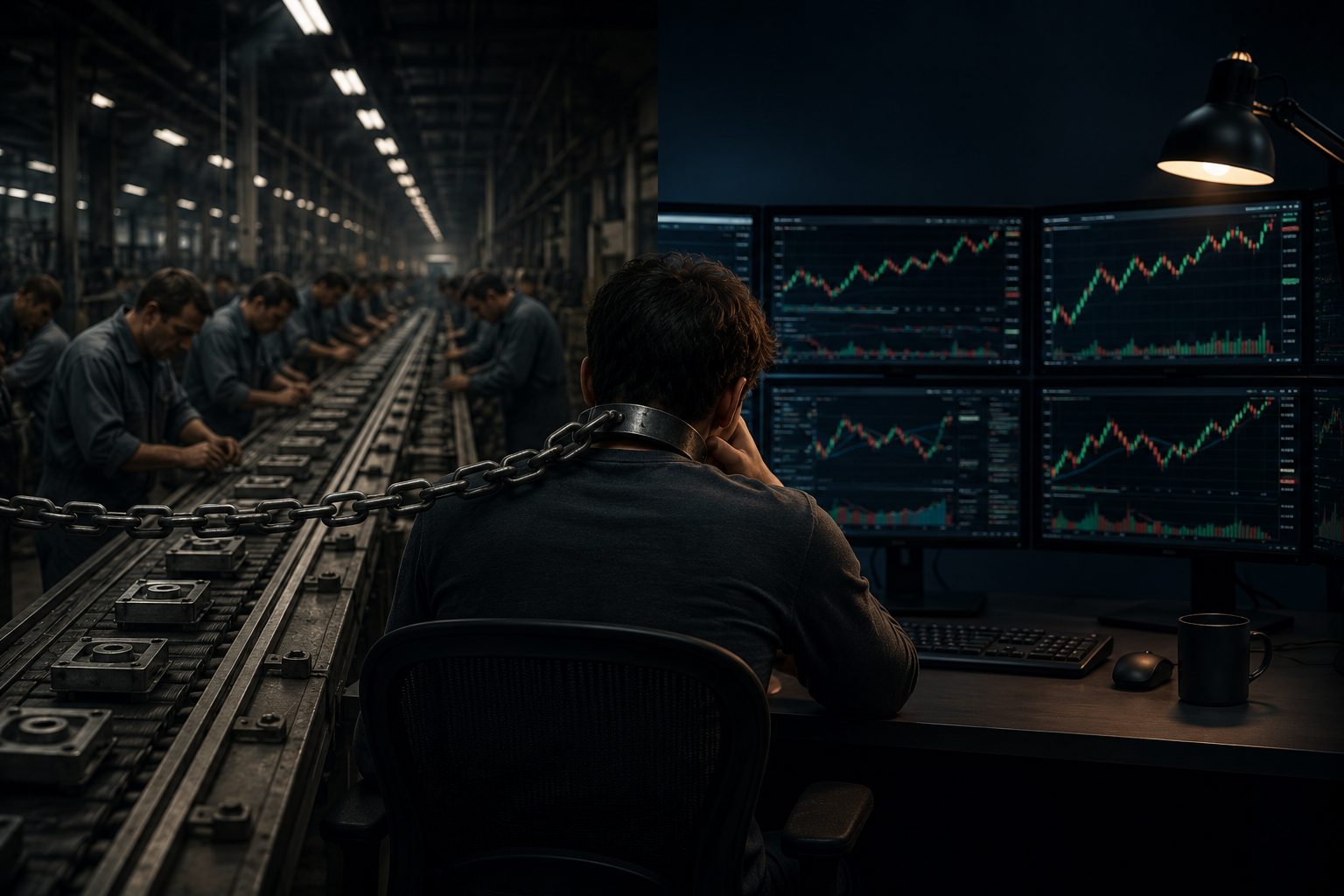
THE ACTIVITY TRAP
You were raised to confuse effort with output
Every job before this one paid you for hours. Show up, do things, produce output, get paid. More effort, more result. That equation is burned into you at a nervous-system level, and it's the exact equation that gets small-cap traders killed.
Markets don't pay for effort. They pay for correctness at the right size at the right moment. The other seven hours of the session, they pay you nothing for participation, and often charge you a fee for it. A beginner sits down at 9:00 and feels a low pressure to justify the chair. So they trade the chair. They take the B setup because they've been watching for forty minutes and something has to happen.
Something does happen. It's just usually a loss.
The market doesn't reward you for being there. It rewards you for being there and right, which are two completely different disciplines.
A professional treats the empty screen the way a mother treats a sleeping toddler: don't touch it, don't fix it, don't optimize it, just be near it and let it be. The best thing you can do most of the day is nothing, and "nothing" is a real position that requires real work to hold.
THE MATH
Selectivity is the only edge that scales
Run the math on your own account and it becomes uncomfortable fast. Pull your last hundred trades. Sort them by conviction level at entry — the honest one, not the one you'd tell a friend. You will almost certainly find that your A-grade setups paid the bills and your B and C setups gave the bills back.
This is the pattern every profitable small-cap trader eventually admits:
- The A trades net positive, sometimes wildly so.
- The B trades net roughly flat, minus commissions, minus emotional cost.
- The C trades — the ones you took because you were bored, tilted, or catching up — are where the account actually bleeds.
The path forward isn't better B trades. There is no version of a B trade that becomes an A trade by trying harder. The path is fewer trades. Same A count, half the total volume. The P&L improves by subtraction.
Selectivity is the only edge that compounds without adding risk. You don't have to learn a new setup, buy a new tool, or wake up earlier. You just have to stop taking the ones you already know are marginal, and you already know which ones those are.
WHAT WAITING LOOKS LIKE
Sitting on your hands is not passive
The reason "just wait for A setups" doesn't work as advice is that waiting is not a static act. It's an active, exhausting, muscular discipline that looks like nothing from the outside. Inside, it's constant.
Waiting means watching a ticker run without you and not chasing. It means watching a setup form, almost trigger, and then dissolve — and closing the tab. It means seeing someone in a chat print a green screenshot on a name you passed, and not letting that number reach into your next decision. It means the fifth time in a row a stock you were watching does exactly what you thought it would after you decided not to take it, and you still don't change the criteria that told you to pass.
Waiting is not the absence of action. It's the constant, quiet suppression of the twenty actions you could take and shouldn't.
The trader who looks the calmest at 10:30 is often working the hardest. She's holding down every impulse the beginner is acting on. The beginner is exhausted from trading. She's exhausted from not trading. The difference at the end of the year is enormous.
THE HONEST REFRAME
Your job description is smaller than you think
Somewhere along the way you were sold a job that doesn't exist: full-time market participant, in the seat, ready for anything, alert to every opportunity. That job description is why your account is smaller than it should be.
The real job is narrower. On a given day you are hunting for a specific animal in a specific environment at a specific time. Everything else that walks past the blind is not your problem. It is not a missed opportunity. It is not a signal that your criteria are too tight. It is a thing that happened to somebody else's account, and your job is to keep yours intact until your animal shows up.
Some days it doesn't show up. Those are supposed to be flat days. If flat days feel like failure to you, that feeling is the enemy — not the market, not your setup, not your broker. The feeling that a quiet day is a wasted day is the exact wiring that turns a good trader into a mediocre one.
Green weeks are built on quiet days you didn't ruin.
The system that makes skipping easier
Everybody knows they should take fewer trades. Almost nobody does, because in the moment, the pressure to click is stronger than the memory of the last time you clicked and shouldn't have. Willpower loses that fight every time. What beats it is structure — a system that reminds you what your A criteria are before your hand moves, that flags when the setup in front of you doesn't meet them, that counts how many marginal entries you've taken this week whether you want to know or not.
MAKETZO is built for the trader who has already figured out that the problem isn't finding more trades. It's an accountability layer that surfaces your patterns back to you in real time — how selective you actually are versus how selective you think you are, which setups pay you, which ones drain you, and what your day looks like when you honor the pass. The traders who use it aren't better at spotting opportunity. They're better at ignoring it. That's the whole edge. Try it free and see what your last hundred trades were actually telling you.