A Game Plan Before the Market Opens

It is 8:45 a.m., and the Investors Underground morning broadcast is walking through the day's plan. The watch list went out last night.
Everything about the community pushes you to arrive prepared. Its game plan starts with three questions worth taping to your monitor: "Which stocks are you going to trade? What kinds of moves are you looking for? Where are you going to focus your time?" Answer them and you trade from a plan "Instead of simply reacting to the market." Michaud narrows it again: "If you are watching 100 stocks, each stock is getting one hundredth of your focus." His summary is one line: "Trading is about quality over quantity."
That gives you a plan for the stocks. You also need a plan for yourself, because the person reading the game plan at 8:45 is not the one who wants back in at 9:41. Write both before the bell.
- The market plan. Your few names, the level that gets you in and the level that proves you wrong. The watch list and the broadcast exist for this.
- The trader plan. In the Focus Room, the Morning Lock-In has you choose one of nine contracts for the day and accept its rules while you are calm. A+ Only Day is his quality over quantity made binding. Cool Down Day is for coming off tilt, and Off Day is for the morning you should not be trading at all. Break one and the contract answers with a warning, a strike, your P&L entry locked for a brief breathing reset or, on the hardest rules, the end of your day.
Know What You Own
It is 9:15. The name on your list is up 60% on a headline, and the question that decides the next hour is who else is about to sell.
Michaud has a hashtag for this, #KnowWhatYouOwn, and he uses it to "let longs know what they're up against." In a 2019 post, he described traders buying a stock while the company's ability to sell shares sat in plain sight: "The risk was KNOWN, traders knew that they could raise at any moment but yet had FOMO." Longs and short sellers both need that answer, and they need it before the order.
Add one line to your game plan for every name: can this company sell stock here?
- Run the symbol through Dilution Check. It reads the company's SEC filings and returns one card: SUPPLY RISK from low to high, whether a shelf or an at-the-market program is open, how many stock sales landed in the last twelve months and how far the cash goes.
- Open the filing behind the number. Every form code on the card links to the filing, so you can read it yourself.
- Read what it could not confirm. Unknown never means no, and a deal that is negotiated but not yet filed cannot appear.
Dilution Check comes with Pro and Elite, and a free trial includes 15 company reads.
It's Okay to Be Wrong, Not Okay to Stay Wrong
It is 9:41. The level on your plan broke, and you are still in the trade telling yourself it will come back.
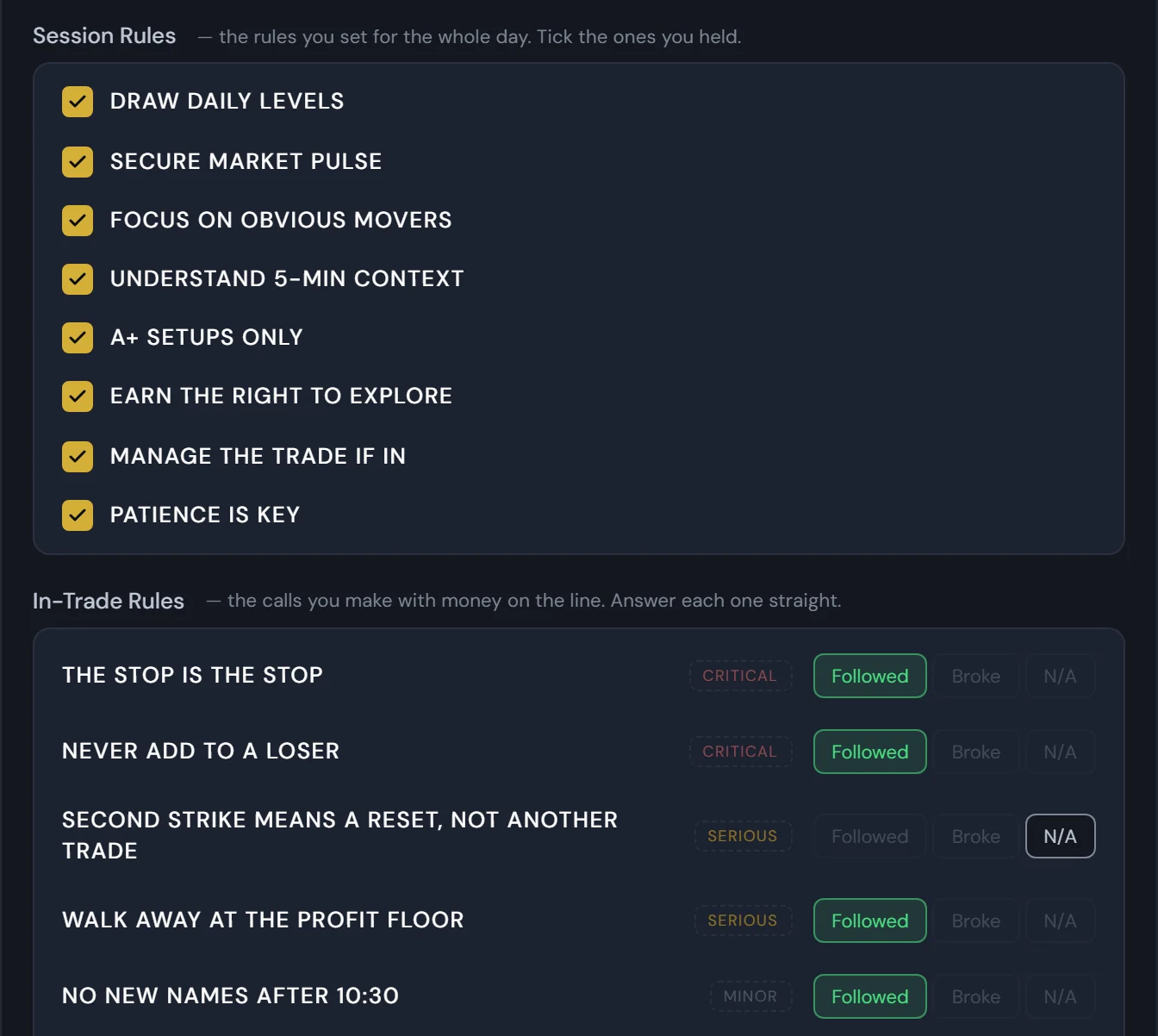
Michaud has a line for that minute in his trading psychology tips: "It's okay to be wrong (repeat that a few times). It's not okay to stay wrong." His rule for momentum trades is shorter: "Nail and Bail. Don't Stay and Pray." Read the whole list and you will notice that almost none of it is about charts. Each tip names an urge, and each urge has a place to go in MAKETZO.
- Staying wrong. Stop Negotiation is a one-minute reset for the stop you want to change.
- Chasing. "Your goal as a trader is not to catch every trade." FOMO Reset is for the run you missed, and HOD Heat Check is for the high you want to buy.
- The loss you want back. "Approach every trade as if it's the start of the day." Loss Reset gives you three minutes, paced by a breathing ring, before the next order.
- The excuse. "Successful traders don't make excuses." The Strike System marks a broken rule as it happens, and COACH SAYS answers in a direct, no-excuse voice.
He asks the question that sits under all four: "Are you controlling your trading or is trading controlling you?" When a contract rule fires, MAKETZO pauses your P&L updates and takes you to a guided reset, so the answer does not depend on how you feel at 9:41.
Profits Can Hide Reckless Decisions
At 4:00 you are up on the day, and that is when the most dangerous lesson gets learned.
"There are so many times we are rewarded for reckless decisions," Michaud wrote. "Sometimes our biggest flaws are hidden by profits that were acquired by reckless decisions." Take a win that way, he warned, and "your behavior was reckless and will be the end of your trading career one day if it's not addressed."
Traders tend to study their red days and celebrate the green ones. His warning says the green day you got away with deserves the harder look, and it is the reason the Picard Score exists. It grades each session from 1 to 10 for how you traded and not what you made. A session can close up $640 and grade 4.6, because the trader took more trades than their own limit, kept going after their own rule ended the day, and sat in losers for 9 minutes on average and winners for 4. A red day run clean can grade high.
Part of the grade comes from you. You mark whether you broke a rule, tag a chased entry or a revenge trade for what it was, and rate your own composure and patience.
Grade the process first, then open the P&L. That is the habit his warning asks for, and a number makes it hard to skip.
Learn From Each Trade
It is 8:00 p.m., and the recap is on. "Trading is an ongoing learning process," the company says, and its video lessons "go over the trades from the day and talk about what we did right/wrong." Take four habits from that recap into your evening.
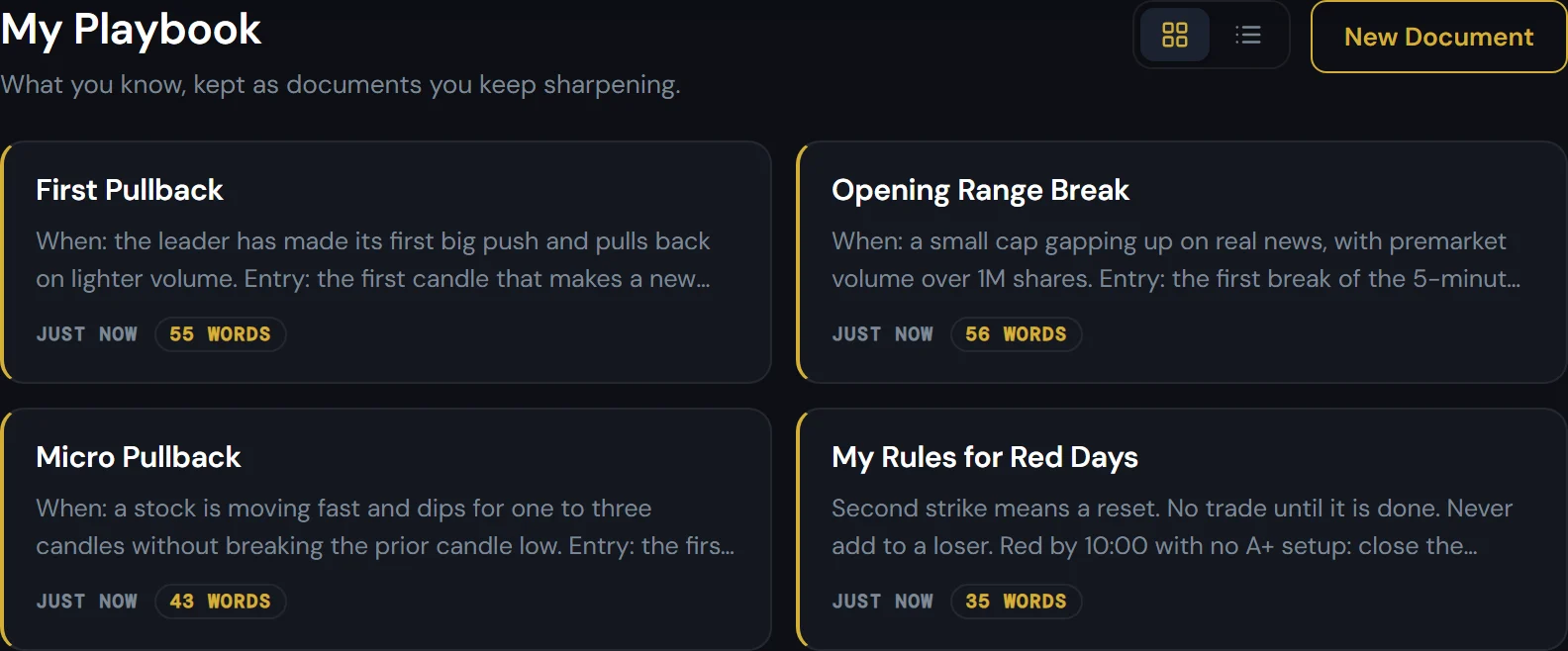
- Find your hours. "Analyze your trades and figure out which times of the day you make the most money," Michaud says. If the money comes in the morning, he adds, the rest of the day may be where you give it back.
- Replay the trade. Bring up a past chart from the recap and open Trade Replay. Enter the buys, adds and sells you would have made, long or short, and watch your running position, average cost and net result update with each fill. You already know how the chart ends, so grade your mechanics and not your timing. You get ten replays free with no account, and unlimited replays inside MAKETZO.
- Test each add. His advice on scaling starts with caution: "First of all, you need to find consistency as a trader before considering scaling up your strategy." He also gives a test worth running on every add in your replay: "It can be helpful to pretend you do not have a position so you can analyze the stock."
- Write tomorrow's note. The Debrief in the Focus Room closes the day in three steps, and your note is waiting the next morning, right before you read the next game plan.
Using Investors Underground and MAKETZO Together
Let the room sharpen your read and let a system keep you honest.
Investors Underground gives you the watch list, the broadcast, the courses and a room full of traders who will tell you what they see. One member wrote that "IU has helped me become more disciplined and made me market aware." MAKETZO, a trading discipline system for small cap day traders, picks up at the moment the plan meets your own impulses.
DAS Trader is the only import MAKETZO takes, so if you execute there, your trades come straight in. The pricing page lists the plans, and each one starts with a 7-day free trial. MAKETZO teaches and keeps you accountable, and it will not hand you a stock pick or financial advice.
MAKETZO is not affiliated with or endorsed by Investors Underground or Nathan Michaud. The quotes come from their published material and from a member's public review. Investors Underground's own terms say "Past performance is not indicative of future returns," and what you trade and how much is your decision alone. Nothing here is financial advice or a recommendation to join a service or trade a stock.
Common Questions
Who founded Investors Underground?
Nathan Michaud, the trader known as InvestorsLive, founded Investors Underground. The company operates as Investors Live, LLC, and he teaches its Textbook Trading and Tandem Trader courses alongside a team of active traders who moderate the chat room.
How much does Investors Underground cost?
The company lists membership at $297 a month, $697 a quarter or $1,897 a year, and its pricing page lists chat, scanners, the pre-market broadcast, trade recaps, nightly watch lists and more than 1,000 video lessons. Bundles with its courses start at $1,497 and then recur at the membership rate. You can cancel at any time, and the company says it does not refund subscriptions, so read its pricing page first.
Is Investors Underground good for beginners?
It can be, if you treat it as school and not as a list of trades to copy. Textbook Trading is pitched at both beginners and experienced traders, the company offers a free beginner course, and it suggests new traders consider paper trading first. One member review on its site says the goal "is not to give you signals but to share the concepts so you can recognize the patterns," so the work of learning stays with you.
Photo by Kvalifik on Unsplash · Photo by Kelly Sikkema on Unsplash