What Changes Before 9:30
At 8:12 a.m. a small cap up 70% shows a $4.10 bid and a $4.35 offer. Buy the offer, sell the bid with no change in price, and you are down almost 6%. Work out the spread as a percent of the price before you send anything.
The spread is the first difference. Four more decide what your order does at 8:12, so look up each one for your own broker tonight.
- When you can trade. Nasdaq executes extended-hours orders from 4:00 a.m. ET, and your broker decides when you can reach them. Many retail platforms start at 7:00 or 8:00.
- Which orders work. Many brokers take only limit orders before the bell and refuse a market order outright. On most platforms a limit order also has to be marked for the extended session, or it waits for 9:30.
- What your stop order does. At many brokers a stop order does not run before the open. If yours does not, your only exit at 8:12 is a limit order sent by hand, into whatever bid is left.
- Whether anything slows the tape. Limit up, limit down price bands apply from 9:30 a.m. to 4:00 p.m. Before 9:30 a small cap can run or collapse with no volatility pause to slow it. A news halt can still freeze the stock, and a frozen stock cannot be sold.
Prices also disagree at that hour. FINRA requires brokers to warn that prices on one extended-hours system may not reflect prices on another running at the same moment, and that news in a thin market can have "an exaggerated and unsustainable effect on the price of a security." Two screens can show two prices at 8:12 and neither is broken.
The Premarket Clock, From 4:00 to the Bell
A print at 4:40 and a print at 9:10 are different evidence, so read the tape with the clock beside it.
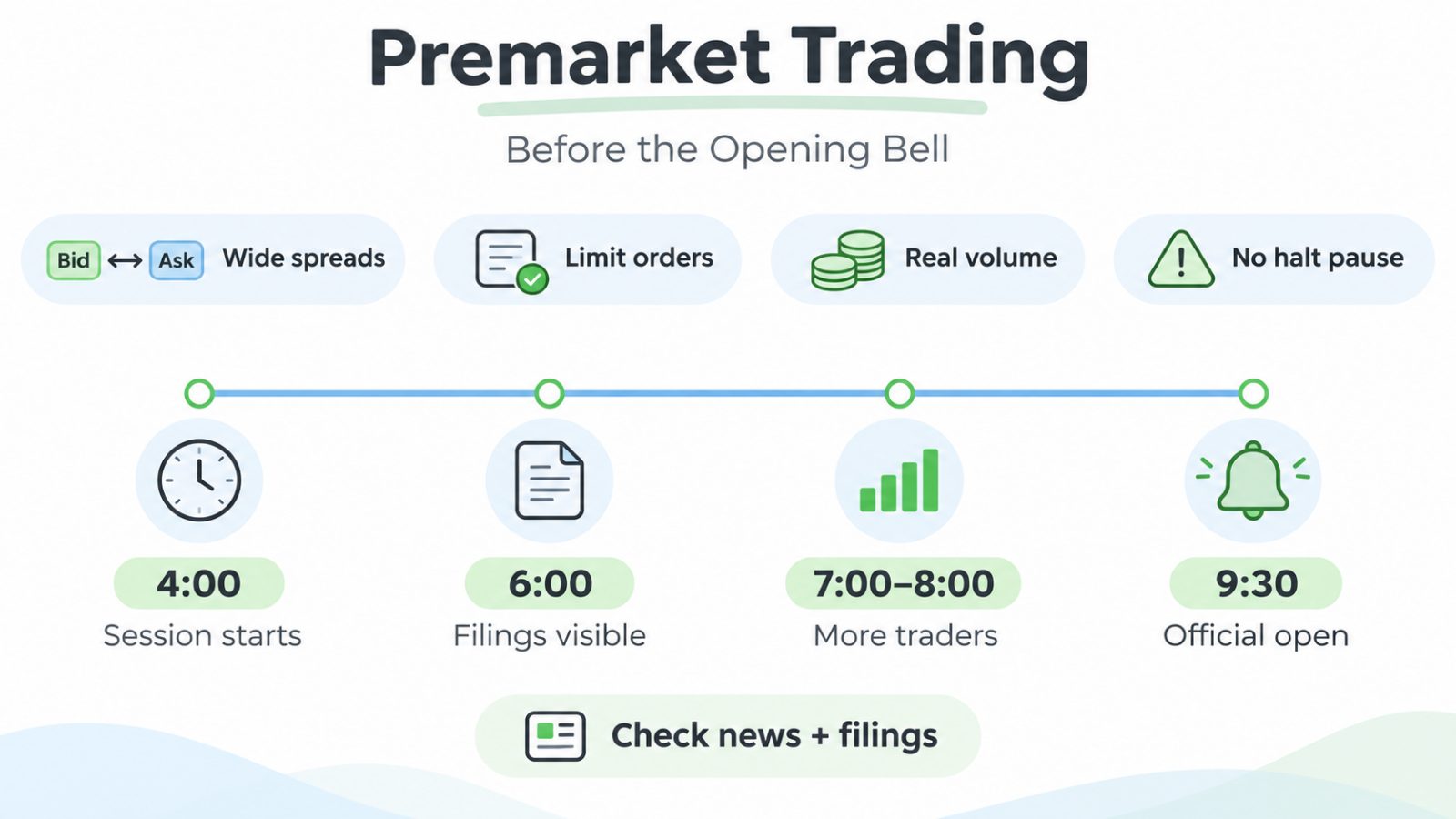
- 4:00 a.m. Nasdaq's extended session begins. A handful of orders can set the morning's high.
- 6:00 a.m. EDGAR opens. Most filings sent after 5:30 p.m. the evening before carry a 6:00 a.m. date and stay unpublished until now, so this is your first look at an offering filed last night.
- 7:00 to 8:00 a.m. More retail brokers open, so more traders can reach the stock and the volume reflects a wider crowd.
- 9:25 a.m. Nasdaq begins publishing imbalance data for its opening auction through subscription feeds, every 10 seconds at first and every second from 9:28.
- 9:28 a.m. On Nasdaq, a market order entered after 9:28 waits for the open and misses the auction.
- 9:30 a.m. The auction sets the official open and the price bands begin.
At 9:15, ask when the volume came in. A stock that traded heavily at 4:30 and went quiet by 8:00 has told you less than one building into the bell.
How to Read a Premarket Movers List
Sort by dollars traded, because percent is the easiest number on the screen to distort.
A stock that closed at $0.80 and trades 400 shares at $1.20 is up 50%. It can sit at the top of a movers list on less than $500 of trading. Ask four questions before a name earns a place on your screen.
- How many dollars changed hands? Multiply shares by price. 300,000 shares at $0.50 is $150,000. The same share count at $12 is $3.6 million.
- How much of the float traded? 200,000 premarket shares on a 2 million share float is 10% of the float. On an 80 million share float, the same volume is 0.25%.
- What changed overnight? Open the headline or the filing and read it. A gap you cannot explain in one sentence has nothing to lean on when sellers arrive.
- Who made the high? A premarket high set by 300 shares at 4:22 a.m. tells you almost nothing. One set by 150,000 shares at 9:11 is a price other traders have marked too.
Draw the premarket high, the premarket low and the prior close before the bell, and write the volume beside each one.
Thin does not mean meaningless. Michael Barclay and Terrence Hendershott, in a 2003 study of Nasdaq stocks, found that a single trade outside regular hours carried more information than a daytime trade, while prices themselves were noisier. The study predates today's small cap premarket, so use it for one idea: a single print can tell you something real, and a single print can be wrong.
Who Can Sell Stock Into the Gap
At 6:05 a.m. a stock that closed at $2.10 is trading at $3.40 on a press release. Before you ask how far it can run, ask who gets to sell shares at $3.40.
Holders are the obvious sellers. Anyone sitting on yesterday's shares can book a gain of more than 60% before most of the market is awake. The company is the seller traders forget. With an effective shelf or an at-the-market program, it can sell new shares at prices it could not get yesterday.
Run the ticker through Dilution Check before you trust the gap. It reads the company's SEC filings and gives a supply risk from low to high, then shows whether a selling channel is open, how recently the company used one and how much cash it has against its burn. Three habits make the card worth more.
- Separate "can sell" from "does sell." An open channel with no recent sales is permission. Three sales this year is a pattern.
- Read "unknown" as unanswered. When a filing could not confirm something, the question stays open and nothing has been ruled out.
- Check the dates. Each form code links to its filing, so compare the newest one with what EDGAR shows this morning. A deal that has been negotiated and not yet filed cannot appear on the card.
A low reading is a statement about filings, and the stock can still fall for any other reason.
What the Opening Bell Does to Premarket Levels
Treat 9:30 as a new price, because the premarket was only a preview of it.
On a Nasdaq-listed stock the official open comes from the Opening Cross, a single auction that brings the on-open orders and the regular book together. Nasdaq takes the price that executes the most shares, then the one that leaves the smallest imbalance, then the one closest to the midpoint of its best bid and offer. Only orders on Nasdaq's own book take part. Other listing exchanges run their own opening process.
The last premarket trade does not set that price, so a stock last seen at $3.40 can open at $3.10 or $3.70. The price bands begin in the same second, and a stock that ran freely for five hours can hit its first pause within minutes.
Three habits carry a premarket plan through the auction.
- Check your open orders at 9:25. On Nasdaq, an extended-hours limit order still resting at 9:30 is eligible for the auction unless it is immediate-or-cancel. A bid you forgot at 8:40 can fill at the open.
- Let the range form. The first candle is noise. Mark the high and low of the first five to fifteen minutes and trade the break with volume behind it.
- Watch whether the gap survives. A stock holding over the opening print and the premarket range on volume is making the case for a gap and go. One that fails those levels and rolls toward the prior close is filling the gap, and a gap lost in the first minutes often fills the whole way.
Write Your Premarket Rules Before the First Order
Trading in premarket is optional, so decide on a quiet night whether you do it at all. Using the premarket only to read the tape is a complete plan.
The danger is the early result. A loss at 8:20 makes you want it back at 9:31. A gain at 8:20 makes the open feel like free money. Either way, your first decision of the day was made in the thinnest market you will see.
Write rules you can answer yes or no.
- I know the earliest time I will send an order, and I send nothing before it.
- I do not trade a gap until I can name its reason, the dollars traded and the company's supply.
- My daily loss limit starts with my first order, premarket included.
- If I missed the run before 9:30, I do not chase it at 9:31.
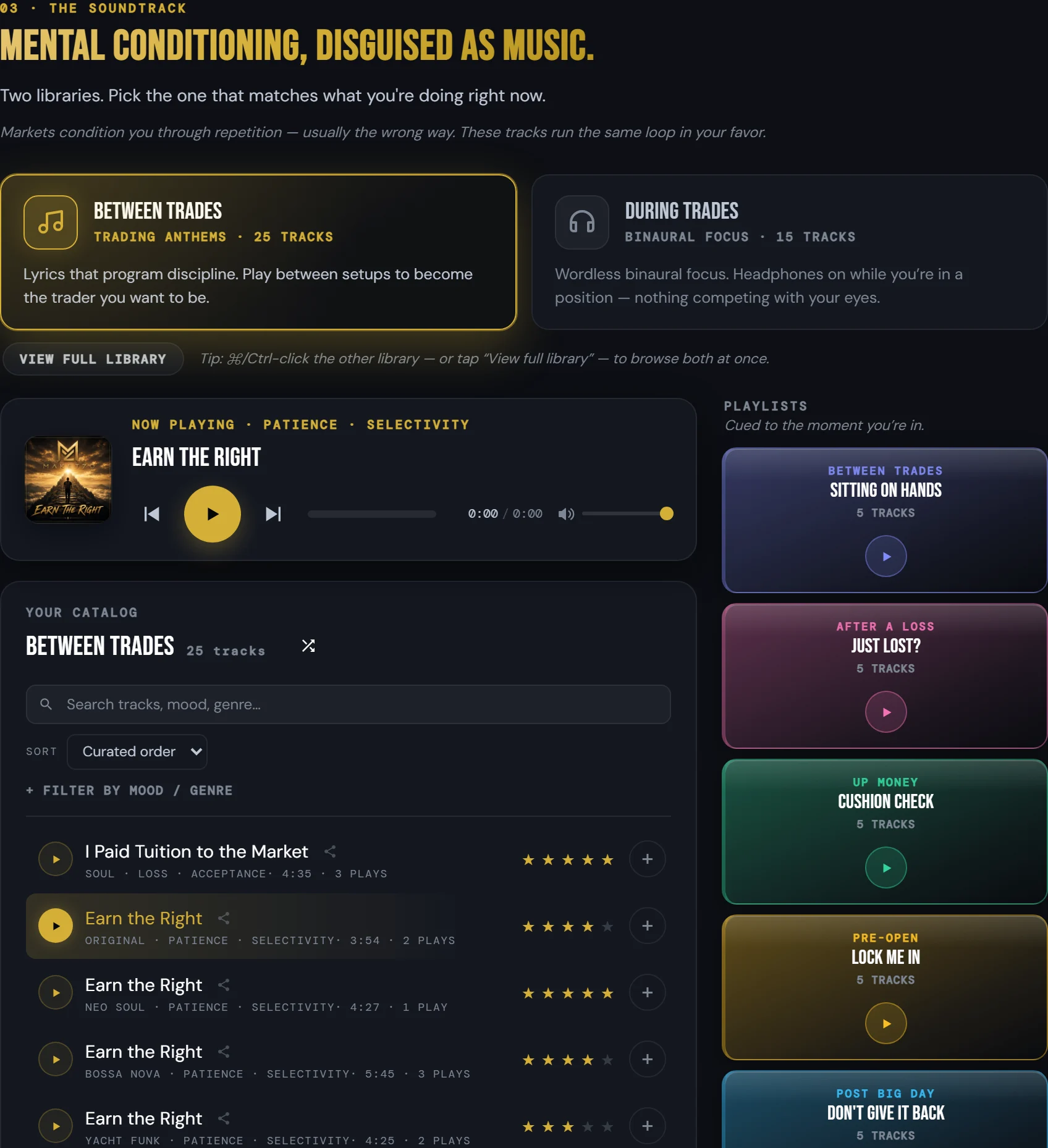
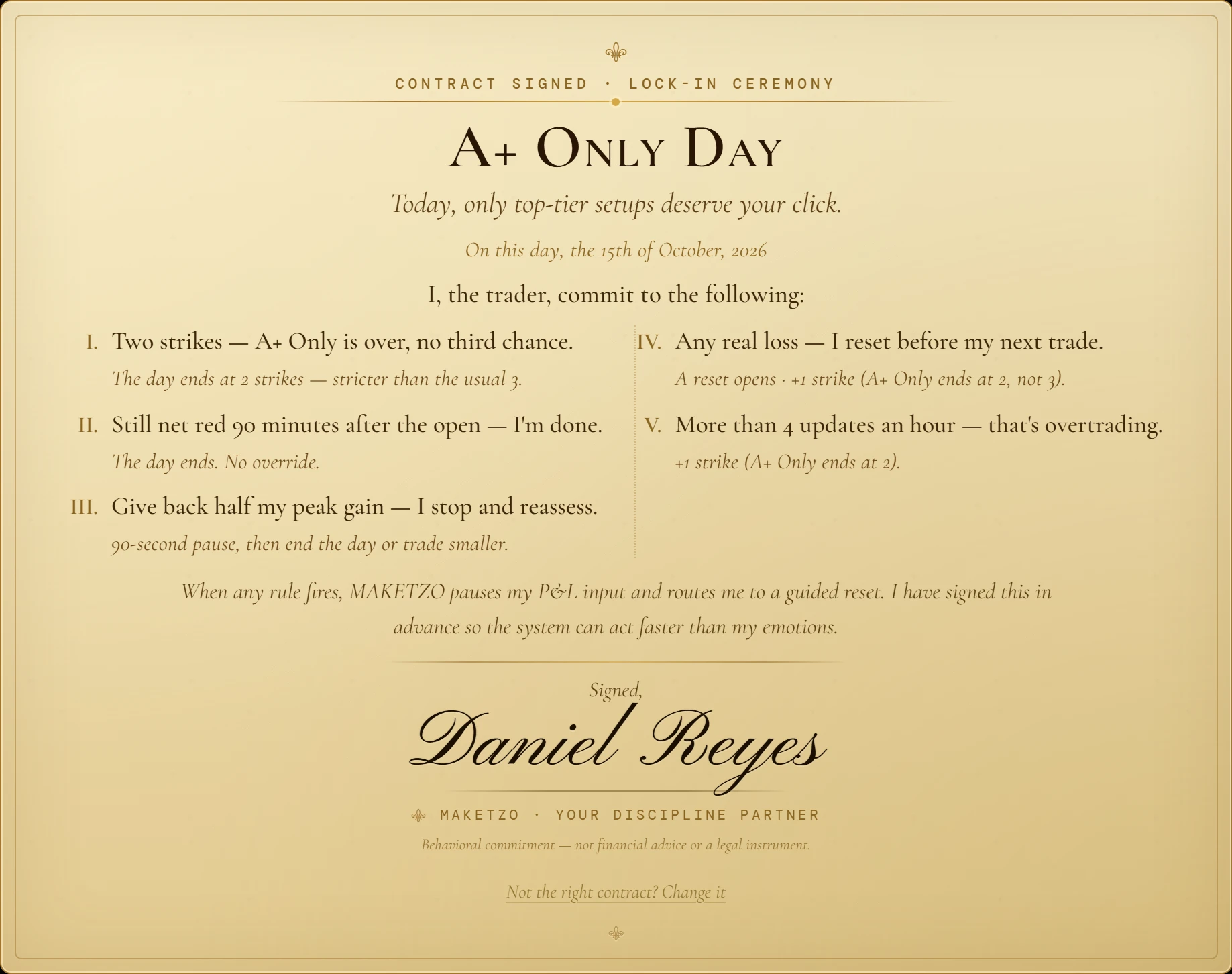
MAKETZO is a trading discipline system for small cap day traders. You commit to your rules each morning with the Morning Lock-In, and COACH SAYS coaches you in real time when your behavior starts drifting from them. The Focus Room is where you reset before a bad morning becomes a bad day. The journal grades discipline on every trade, so a month of records will show whether your mornings before 9:30 follow your rules.
If you execute on DAS Trader, MAKETZO imports your trades from there, and DAS Trader is the only import it takes. MAKETZO teaches and keeps you accountable, and it never gives stock picks or financial advice. Every plan starts with a 7-day free trial, and the pricing page lists the plans.
Common Questions
What time does premarket trading start?
On Nasdaq, extended-hours orders can execute from 4:00 a.m. ET, and the session runs until the 9:30 a.m. open. Your broker sets your own window, and some retail brokers do not open until 7:00 or 8:00 a.m., so check yours before you plan a morning around an early catalyst. Nasdaq has also set December 6, 2026 as its target for overnight weekday trading, if the SEC approvals and the market data feeds are ready. Regular hours and the 9:30 Opening Cross stay the benchmark.
Can anyone trade in the premarket?
Most retail traders can, through a broker that offers extended hours, and FINRA requires the broker to give you a risk disclosure before you start. The better question is whether a given stock is tradable at that hour. A thin small cap can go minutes between trades, and the bid you see may not be there when you need it. If the spread would wipe out what you hope to make on the trade, your answer for that stock on that morning is no.
Does the premarket price decide the opening price?
No. On a Nasdaq-listed stock the official open comes from the 9:30 Opening Cross, which picks the price that executes the most shares among the orders on Nasdaq's book. The premarket price is a clue to where that auction may land, and on a thin small cap it can be well off. Compare the premarket range with the first regular-session prints, and let those prints tell you which premarket levels still matter.