BOTH TIMES I WAS INTERESTING
I blew up twice. Rules weren't the problem.
I blew up twice. The first time I told myself I didn't have rules. The second time I had rules. I just didn't want to be the person who followed them.
That's the sentence I wish someone had put in front of me in year one. You can read every book, write every rule, hand letter them on an index card above your monitor, and still take the account to zero. Because the problem was never the rules. The problem was that the person reading the rules at 9:28 was more interesting to himself than the person the rules were trying to create.
The person the rules create is boring. Same setup. Same hour. Same size. Same exit. Over and over. Until Friday. Then again Monday.
I did not want to be that person. Neither do you. That is the actual job.

THE TEXTURE OF A PROFITABLE DAY
What boring actually looks like at the screen
Let me describe a profitable Tuesday for someone who's figured this out. Not a prescription. Just the texture.
He wakes up at the same time. Scans the same screen for the same two patterns he's been trading for eighteen months. Finds one of them in premarket. Writes it down. Waits.
The setup triggers at some point in the first hour. He takes it. Same clip he always takes. Stops where he always stops. Exits where he always exits. It works, or it doesn't. He closes the platform before noon.
That's the whole day. There is no highlight reel. There is no "today I crushed it." There is a small, repetitive, unshareable event that paid him. If you filmed it you couldn't make a YouTube thumbnail out of it.
Now listen to how that day feels from the inside. It feels like you're not doing enough. It feels like you missed the real move. It feels like other traders in the Discord had a better day because they took more swings. It feels like you're coasting. It feels, very specifically, like underperformance.
That feeling is not evidence. That feeling is the job.
WHAT THE SECOND ONE TAUGHT ME
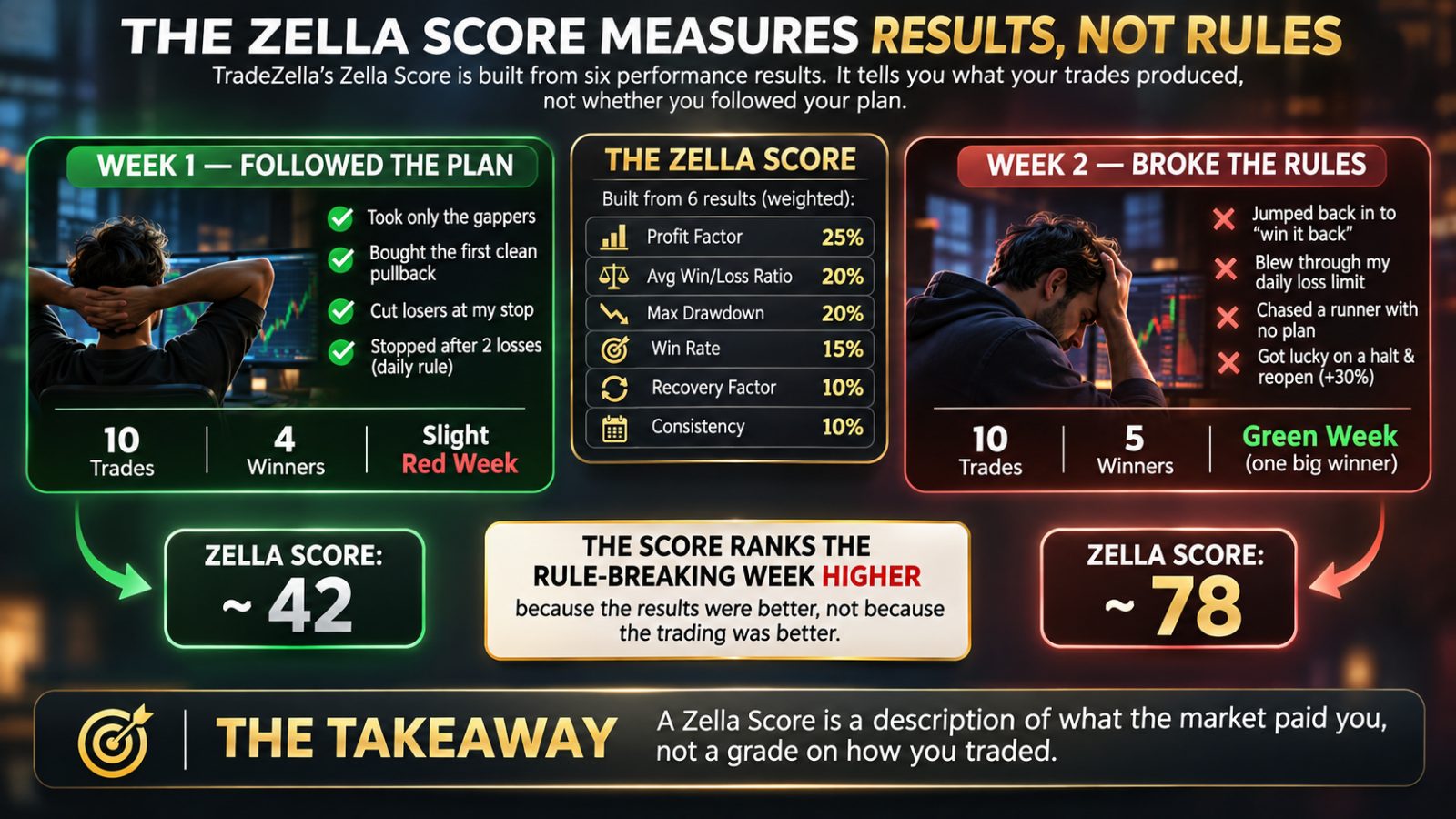
The first blow-up is a mistake. The second is a preference.
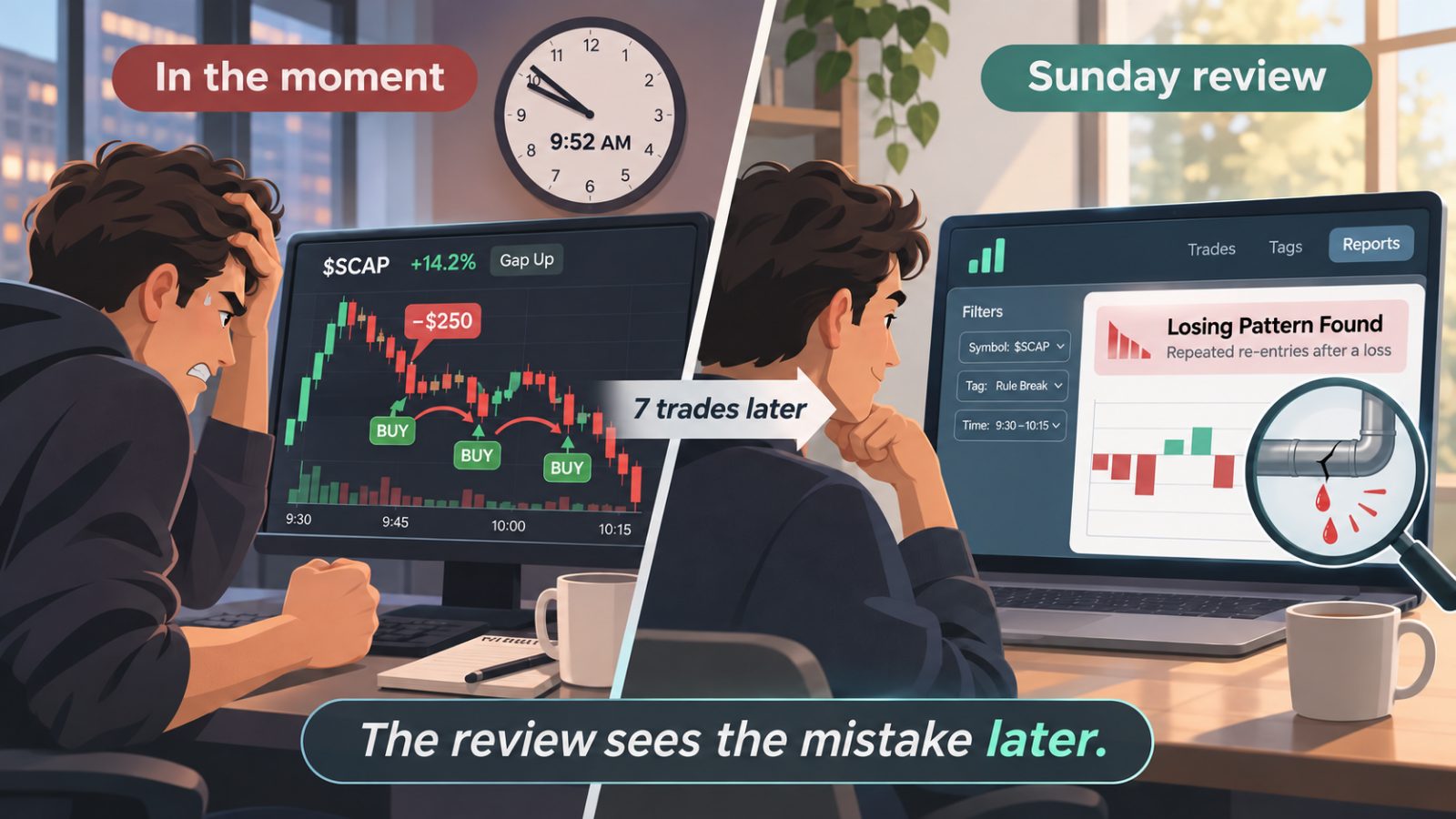
The first time I blew up, I could point at the failures. I chased. I revenge traded. I sized up on tilt. The fix was obvious: stop doing those things. Write rules. Follow them.
So I did. The second account was running clean for six weeks. I was green. I was fine. And some quiet, private part of me kept whispering that I was underperforming the day.
The setup paid, sure. But there was a bigger move on another ticker. There was a cleaner entry if I had waited eight more minutes. The guys in chat were up more. I was leaving money on the table.
I started adding trades. One. Then two. Then a setup I had never actually backtested, because the texture of the day felt lazy and I wanted to feel like I had earned something. Six weeks later the second account was gone.
The first blow-up is a mistake. The second blow-up is a preference.
The thing I was listening to was not my edge. It was my own aversion to being a person who sits still and takes one trade a day. The second blow-up was not a failure of discipline. It was a success of identity. I preserved the self I liked over the account I wanted.
THE GRIEF NOBODY NAMES
You wanted to be a trader. The job wants somebody smaller.
You cannot argue yourself out of this. I have tried. It is a grief, and you have to let it be one.
The trader who makes money looks like somebody you would not want to be at a party. He does one thing. He talks about the one thing. He doesn't take the obvious setup because it isn't his setup. He skips the whole middle of the day. He's finished by eleven. He will tell you, flatly, that he doesn't really trade the news.
The trader who loses money, and who you secretly still want to be, is interesting. He has stories. He can describe the squeeze on Monday and the gap fade on Tuesday and the halt resumption on Wednesday. He's in every chat. He is, in a word you don't want to use about yourself, a trader.
You wanted to be a trader. The job wants you to be someone who takes one trade and leaves.
The second account died because I was mourning the first guy while pretending to be the second. Half in on both. The accounts know when you are half in.
WHAT ACTUALLY HELPS
The feeling doesn't go away. Bring something stronger to the open.
Here is the part I learned the hard way, and the part I wish someone had made me write down after the first account.
The feeling of underperformance is not a bug in your psychology that will be debugged on some future Tuesday. It is permanent. It shows up every single morning in the ten minutes before the open, when the day's possibilities are still wide and your boring plan feels like a prison you built for yourself overnight.
You will not out think it. You will not out journal it. You cannot talk to yourself hard enough, in the moment, to beat the version of you that wants to feel like a trader today.
What works is cheap and structural. You need something outside your head that remembers what you decided when you were calm. Not a note. Not an intention. A pre committed object, written down, that says: this is the setup, this is the size, this is the exit, and the version of me who wrote this does not permit the version of me reading it to argue.
That object is what Morning Lock-In is for. You sign your rules while you're still calm, before the first order, and the boring version of you gets a seat in the room when the interesting version of you shows up at 9:28. It will not make the day feel less like underperformance. It will let you underperform on purpose, which, four years in, I can tell you is the only thing that ever actually paid.