The Report That Found the Leak Seven Trades Late
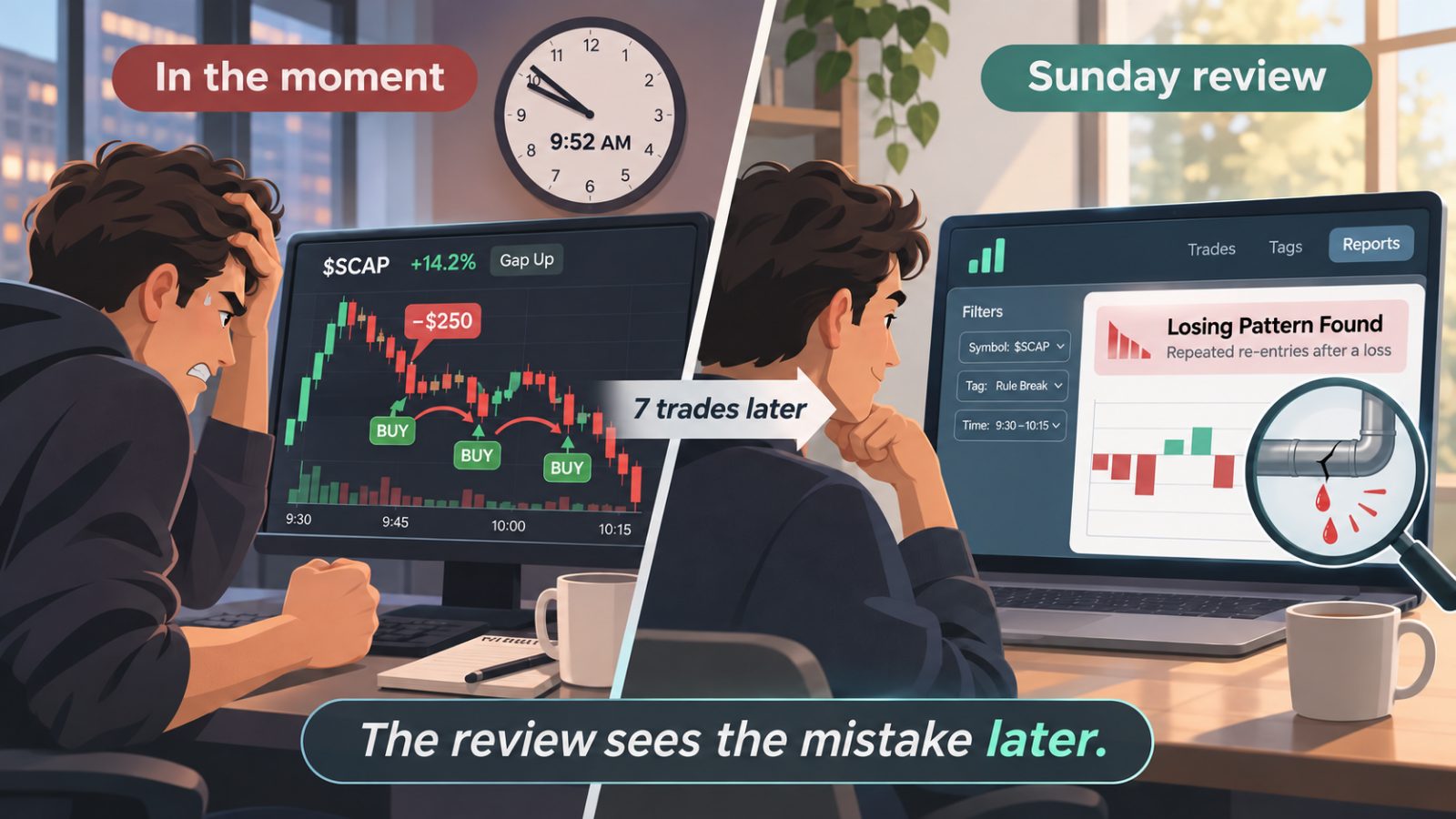
Picture a small cap trader on a Tuesday. At 9:52 AM a gapper fails at its premarket high, and the trader cuts it for a loss at the planned price. Ninety seconds later the same stock dips again, and the trader buys it back to win the money back. It fails again. A third entry follows at 10:05.
On Wednesday the urge returns after the first loss, and this time the re-entry works. The stock rips 20 cents the right way and the loss is gone in four minutes. On Thursday come two more re-entries, both losers.
Sunday night every trade is in TraderVue, imported and tagged. The filter for re-entries after a loss shows seven trades. Six lost, and together they cost more than the rest of the week made. The time-of-day report shows the damage bunched within five minutes of a prior loss.
TraderVue did its job perfectly. It found the leak, priced it to the cent and dated every drop. It found it seven trades after it started, and after the habit had been paid once.
Lay that week next to any tool you are considering and ask one question: when does this tool first see the mistake? The answer tells you what it can fix.
What TraderVue Does Well
Start with what earns TraderVue its place. The strengths are real:
- Imports. TraderVue lists "80+ Trading Platform Integrations," DAS Trader among them, across stocks, options, futures and forex. If you trade through more than one broker, it can keep everything in one place.
- Charts on every trade. In its own words, you "review your trades with automatically generated price charts on multiple timeframes, from weekly down to 1-minute." Seeing your entry on the 1-minute chart a week later is humbling and useful.
- Tags and filters. Tag every setup and every mistake, then filter any report by tag. That is how the re-entry leak got found at all.
- Reports. Results by time of day, day of week, price range, setup and trade duration. Gold adds exit analysis, which shows what your exits left on the table.
- Mentors and sharing. Paid plans allow unlimited mentors, and you can share trades with the community for feedback.
Here is the rule of thumb: if you cannot say which setup and which half hour pay you, a month of TraderVue imports will tell you. For a trader who has never measured anything, that alone can be worth the fee.
How Much Does TraderVue Cost per Month?
TraderVue publishes three tiers:
- Free. "Users on the free plan have a monthly import limit of 30 trades," in the words of TraderVue's help center. The count is grouped trades, not executions, and it runs by the month you import them.
- Silver, $29.95 a month. Unlimited trade imports, broker sync and advanced reporting.
- Gold, $49.95 a month. Everything in Silver plus trade exit performance analysis, max potential P&L analysis and support for commissions and fees.
Paid trials take a card and convert automatically unless you switch to the free plan before they end.
Count your round trips before you pick. A small cap trader who takes five round trips a session fills the free plan's 30 trades in six trading days, so for most active traders the real choice is Silver or Gold. If exit analysis is the report you want most, budget for Gold.
Is there a free alternative to TraderVue? Its own free tier is one, for a slow month. A spreadsheet is another, and it reports just as late.
What TraderVue Misses for a Small Cap Trader
The gaps are not bugs. They come from what TraderVue is: a review tool.
- It only sees finished trades. TraderVue describes itself as a way to "track and review every trade, no matter how old." Nothing in its own description of the product acts while you trade, and it has no place to write a rule and check yourself against it.
- It grades results. Every report is built from P&L, win rate and the trades themselves. A rule you broke on a winning trade shows up as a winning trade, unless you remembered to tag it, and remembering is the very habit that fails on a bad morning.
- It arrives on your schedule. The weekly review is when you choose to sit down. The re-entry on Wednesday paid inside four minutes. A reward that lands in minutes beats a correction that lands days later, nearly every time.
- The best analysis costs the most. Exit analysis and commissions sit on Gold, and an active trader outgrows the free plan in about a week.
None of this is unique to TraderVue's users. Professionals do the Tuesday re-entry too. A study of proprietary traders at the Chicago Board of Trade found they "appear highly loss-averse, regularly assuming above-average afternoon risk to recover from morning losses."[1] Those were full-time traders with every report they wanted, and the pull to win it back was still there in the afternoon.
If you stay on TraderVue, add the review it cannot do for you: one written line after every exit, before you open another chart, naming the rule the trade followed or broke. That one line reaches the minute the reports never will.
Why MAKETZO Is Built for the Minute TraderVue Never Sees
MAKETZO starts from the opposite end. It assumes you already know your numbers and your rules, and that the losses come from the moments you break them.
The case rests on one finding about willpower. In a 2009 study, smokers who were told their self-control was strong chose to sit closer to temptation and gave in more often than smokers told it was weak.[2] Believing you will be disciplined in the moment is exactly what seats you in front of the next re-entry. So the check has to be set up while you are calm and has to act while you are not. Here is how MAKETZO covers each part of that Tuesday:
- Before the bell. The Morning Lock-In is where you commit to your rules and sign the day's contract, so there is a standard written down before the first trade.
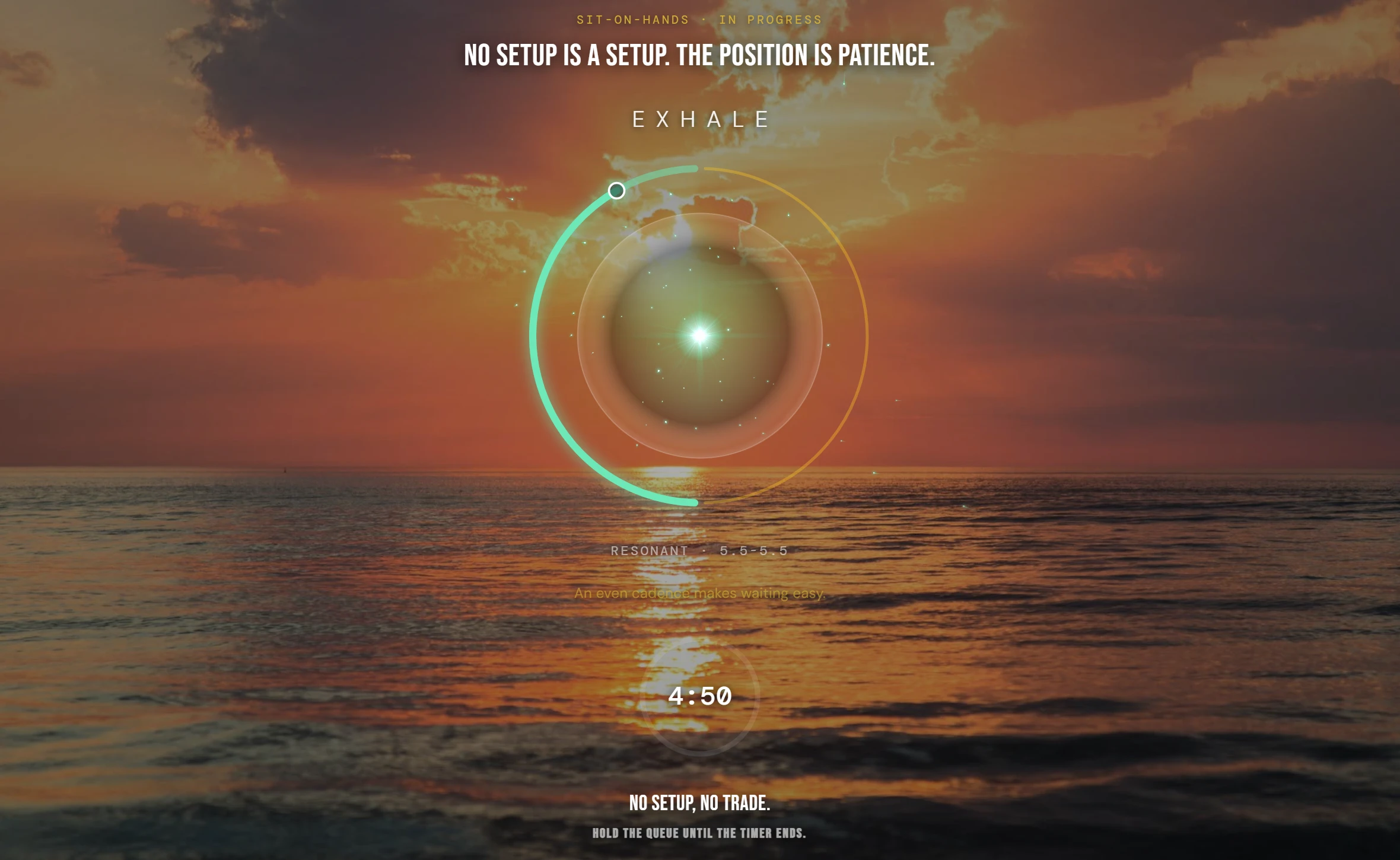
- In the minute after a loss. The Strike System counts a strike for every loss past your strike line and for breaking some contract rules, like trading too often. COACH SAYS puts a plain instruction on your screen after each P&L you type, when you near a limit you set. Two strikes in a session might open a breathing reset. Touching your drawdown line might surface your anchor image and offer a longer reset. That is the 9:53 AM re-entry: you typed the loss before it, so MAKETZO has already told you where your day stands while you can still stop, and the Focus Room keeps a record of every reset you run.
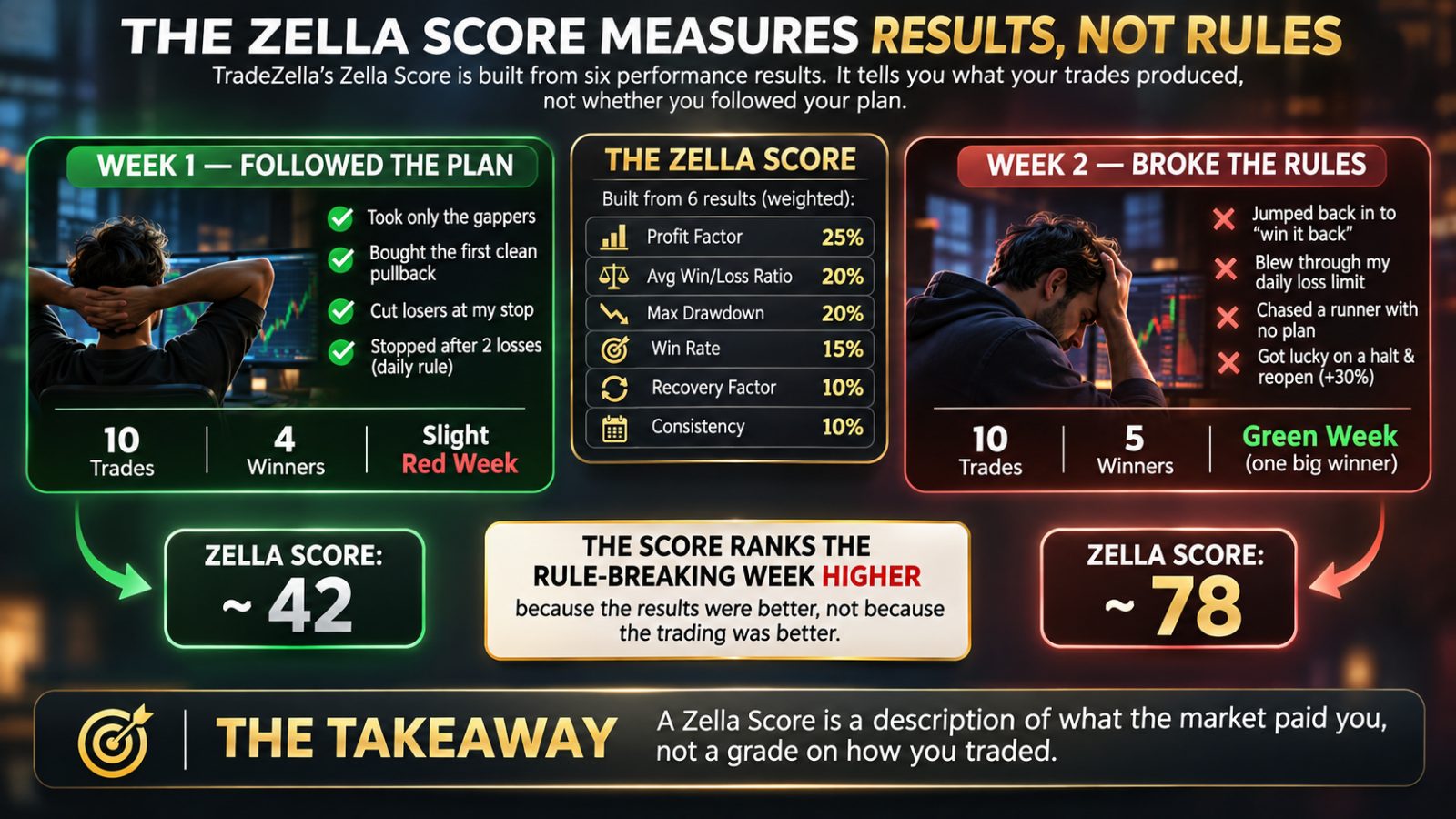
- At the close. The journal grades discipline on every trade, with each In-Trade Rule answered Followed, Broke or N/A. Your Picard Score never reads P&L, and its biggest part is whether you followed your rules and your contract, so Wednesday's winning re-entry, marked Broke, lowers the grade instead of raising it. The next morning your Focus for Tomorrow comes back with a question: did you honor it?
- Once a week. Reports still give you win rate, average win and loss, the R-Ratio and cents per share. TraderVue slices results in more ways, and that is a fair trade for a trader whose leak is behavior.
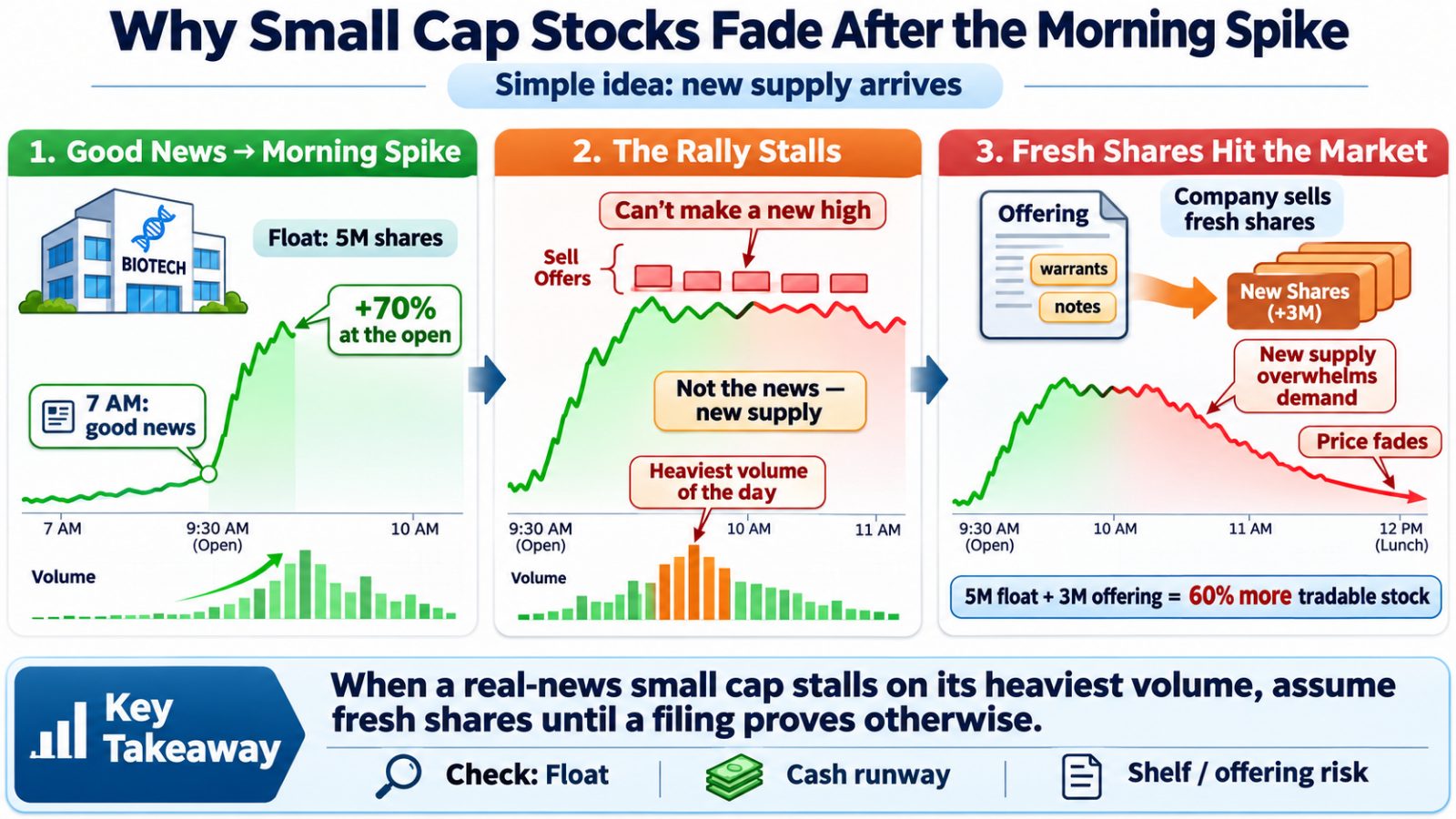
- For small caps specifically. On Pro and Elite, Dilution Check reads a company's SEC filings and tells you whether it can sell stock into the run you are watching.
If you trade on DAS Trader, MAKETZO imports your fills. If you trade on another platform, a net P&L you type in is enough for the discipline side, because the Picard Score never reads it. Every plan starts with a 7-day free trial. For the feature-by-feature table, imports and price included, the Tradervue alternative page sets the two side by side.
So is TraderVue worth the money when you trade small caps? As a record, yes: it will show you to the cent what your habits cost. As a fix, no: a habit that pays you in four minutes on a Wednesday will not be broken by a report you read on Sunday. Stay with TraderVue if you need to learn your numbers. If you already know them and keep breaking your rules anyway, you need something that is there in the session with you.
Tonight, filter last month's trades for every entry taken within five minutes of a loss and add up what they cost. If that number is bigger than a year of any subscription, your problem is not information.
[1] Coval and Shumway, Do Behavioral Biases Affect Prices?, Journal of Finance 60, no. 1 (2005): 1-34.
[2] Nordgren, van Harreveld and van der Pligt, The Restraint Bias: How the Illusion of Self-Restraint Promotes Impulsive Behavior, Psychological Science 20, no. 12 (2009): 1523-1528.