The Day Trading Primer: How a Trade Makes or Loses Money
Day trading is renting a stock for minutes, and the rent is due whether the stock goes your way or not. You buy and sell the same shares inside one session and finish flat by the 4:00 PM close, so nothing you own can gap against you overnight.
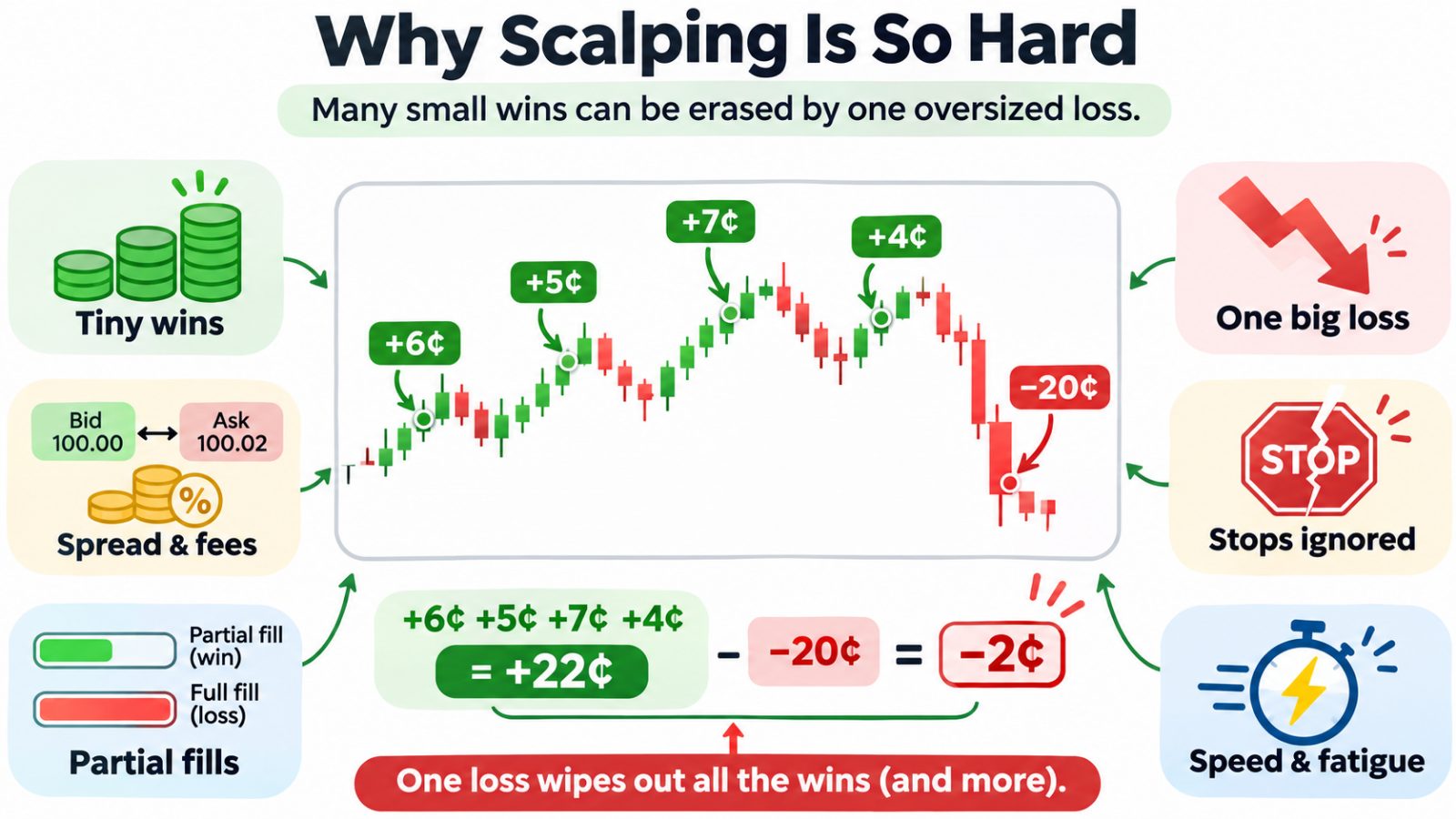
Your profit is the change in price times your shares, minus the rent. The rent is the spread plus fees. If a stock is bid at $3.00 and offered at $3.04, you are down 4 cents a share the instant a market order fills, and the bid has to climb 4 cents before you are even.
Four more things to know before your first order:
- Orders. A market order guarantees the fill and not the price. A limit order guarantees the price and not the fill. In a thin stock, that choice can matter more than your entry.
- The clock. The open brings the heaviest volume and the biggest swings. Midday usually thins out and drifts. Volume tends to pick back up in the last hour.
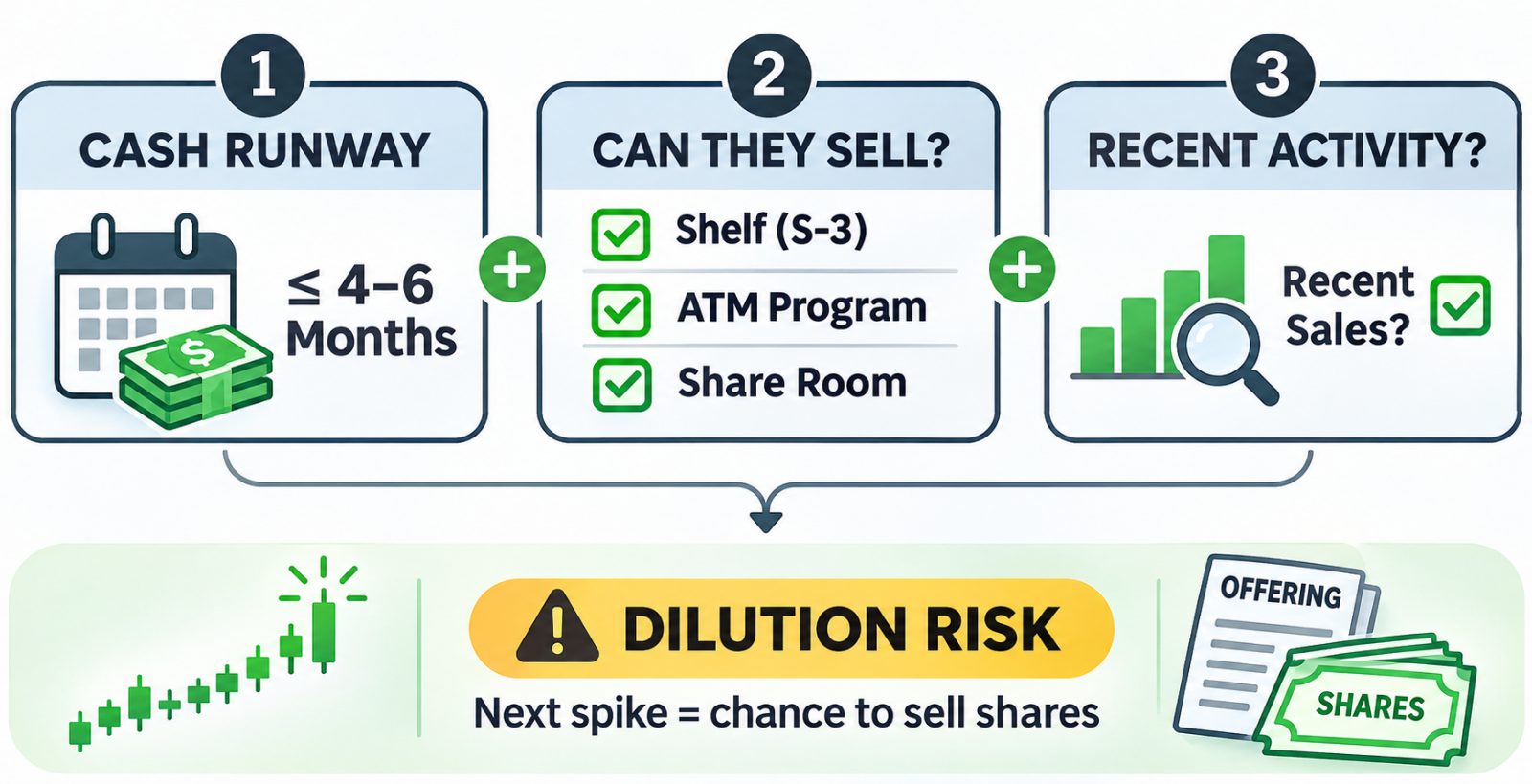
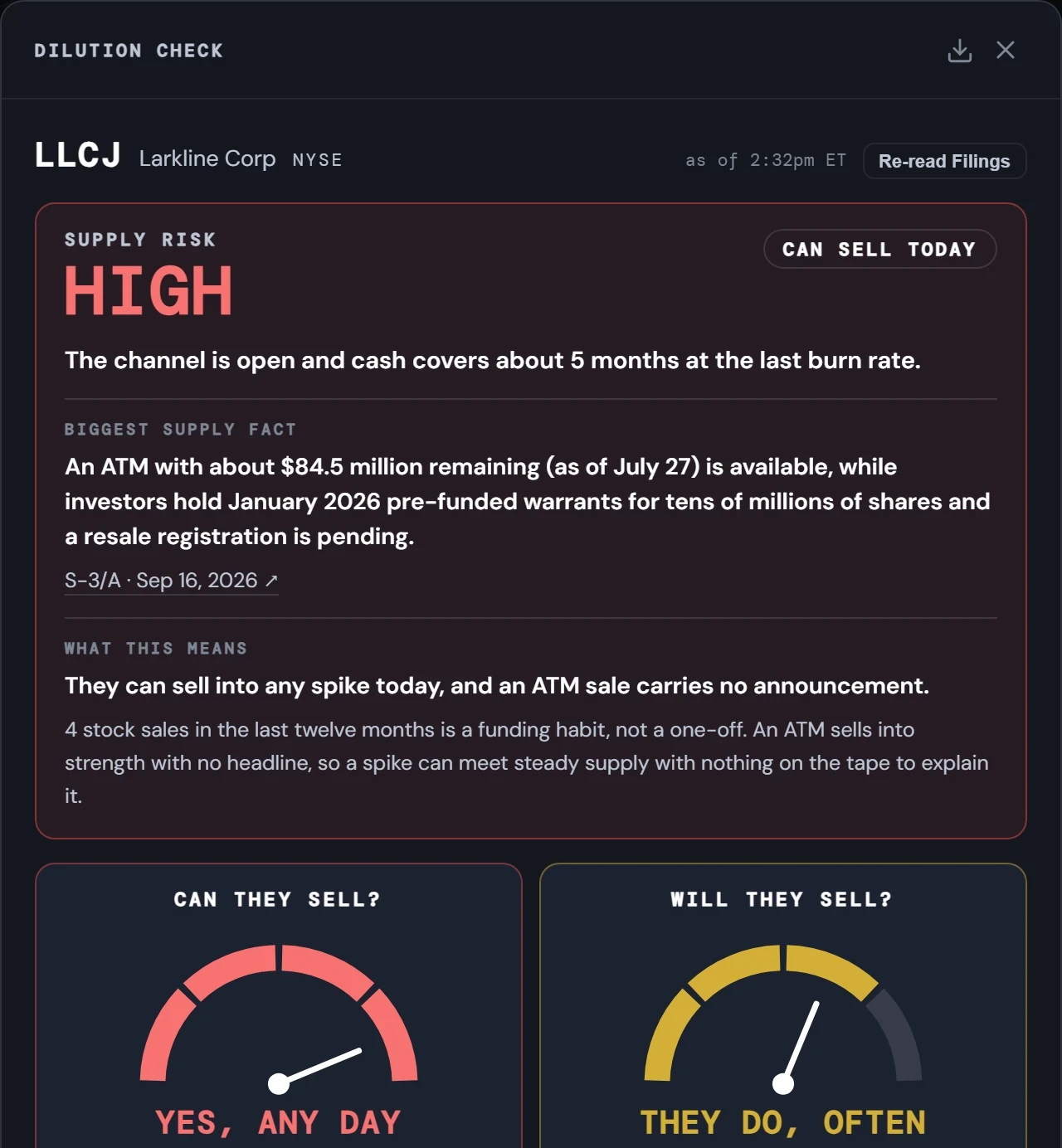
- Small caps. Many day traders work low-priced, thinly traded companies because they can run hard on news. They can also halt, and the company can sell new shares into the run. MAKETZO's Dilution Check reads a company's SEC filings and shows whether it can sell stock right now and how recently it has.
- Your account. A cash account has no day trading minimum, and you trade only what has settled, which takes one business day. A margin account needs $2,000 in equity to use leverage. The old $25,000 minimum was replaced this year, though some firms can keep it through October 2027, so ask yours.
Still asking how does day trading work at the level of each order type and account rule? Read the full walk-through before you fund an account.
What AI Changed About Jobs and About Trading
Nobody has to hire you to send an order, and right now that matters to a lot of people.
Employers have cited AI in 121,401 announced US job cuts through October 2026, about one in five of all the cuts Challenger, Gray & Christmas counted this year. Stanford researchers using payroll data report that employment of 22- to 25-year-olds in the most AI-exposed occupations stands 19 percent below where it would be had it kept pace with less-exposed peers, mostly because fewer of them are getting hired. The same research found no evidence of economy-wide displacement. The damage is concentrated, and for the people inside it, it is real.
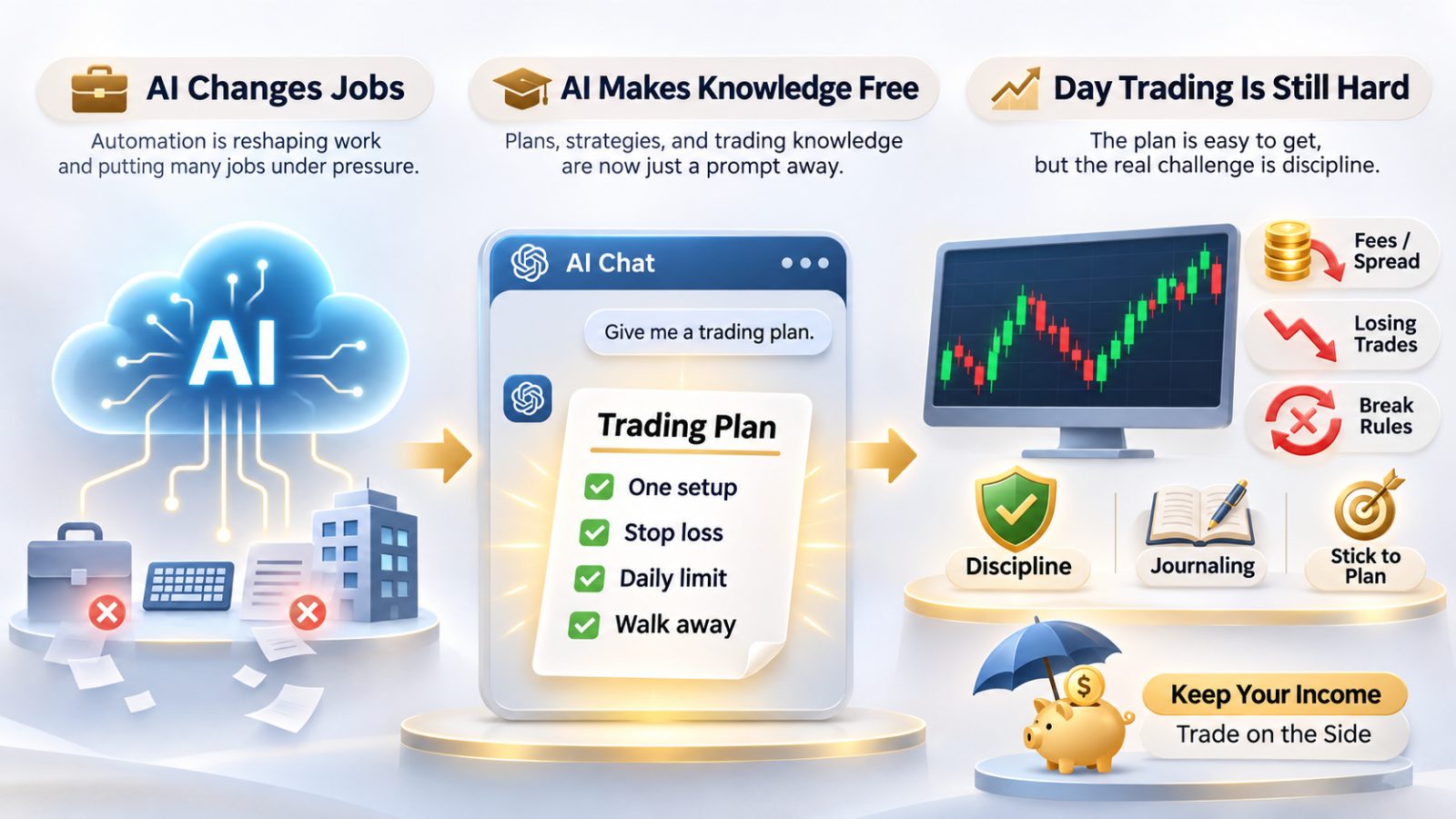
So people go looking for a skill that needs no interview and no degree. AI did something else at the same moment, and it is the idea to keep: it made knowing free.
Ask any AI chat window to write you a day trading plan and within a minute you will have a decent one: one setup, a price that ends the trade, a daily loss limit, a rule for walking away. That page used to take months of reading to assemble. Print it and lay it on your desk. Everyone else can get the same page, so the page is no longer an edge.
Use AI for what it does well. Before the open, have it explain a term, summarize a press release or quiz you on your own rules. Then check anything you plan to trade on against the source, because a confident wrong answer costs the same as a bad tip. Keep it out of the decision. Machines have traded for decades and they are faster than you. What no machine can do is make you follow your plan.
Why Day Trading Is So Hard
The plan on your desk survives until your first red trade. A calm version of you wrote it. The trade gets taken by the version that just lost money and wants it back.
How much does an average day trader make? On the best evidence available, most lose. Researchers studying Taiwan's stock market from 1992 to 2006 found that less than 1 percent of day traders reliably earned profits after fees. In Brazil's equity futures market, 97 percent of people who kept day trading for at least 300 days lost money, and fewer than one in 100 earned more than a bank teller. The SEC says it flatly: "Day traders typically suffer severe financial losses in their first months of trading." So when someone asks whether you can make $1,000 a day, the better question is whether you can still be trading in a year.
Here is what you are up against:
- The rent never quits. A trader who is right half the time, with average wins equal to average losses, still loses, because spread and fees come out of every trade.
- A broken rule can pay. You ignore your exit, the stock comes back, and you get paid for the habit that will hurt you most. Lucky days teach the wrong lesson.
- A loss changes who is clicking. The urge after a red trade is to get it back on the next one. Keep one rule of thumb for that minute: never send an order whose only job is to fix the last one.
- Need makes all of it worse. A trader who has to make rent this month cannot sit out a bad tape, and the market charges the most to the person who cannot wait.
- Screen time does not grade you. Those Brazilian traders had 300 days of practice, and the study found no evidence they learned from it. Repetition without an honest grade repeats the mistake.
Knowing none of this helps at the moment it counts, which is why the help has to arrive at that moment. COACH SAYS speaks up in real time when you start drifting from the rules you signed, and MAKETZO's Focus Room gives you a place to reset before the next click.
How to Start Trading in the Stock Market for Beginners
Learn this the way you would learn any skilled craft: slowly, on the side, with somebody else still paying you. This is general education, not financial advice. In order:
- Keep your income. A paycheck is what lets you skip a bad morning. If AI has your job in its sights, the next paycheck comes first and trading comes after it. Fund an account only with money you can afford to lose.
- Learn one setup on one kind of stock. One pattern and one part of the day, until you can describe it without looking it up.
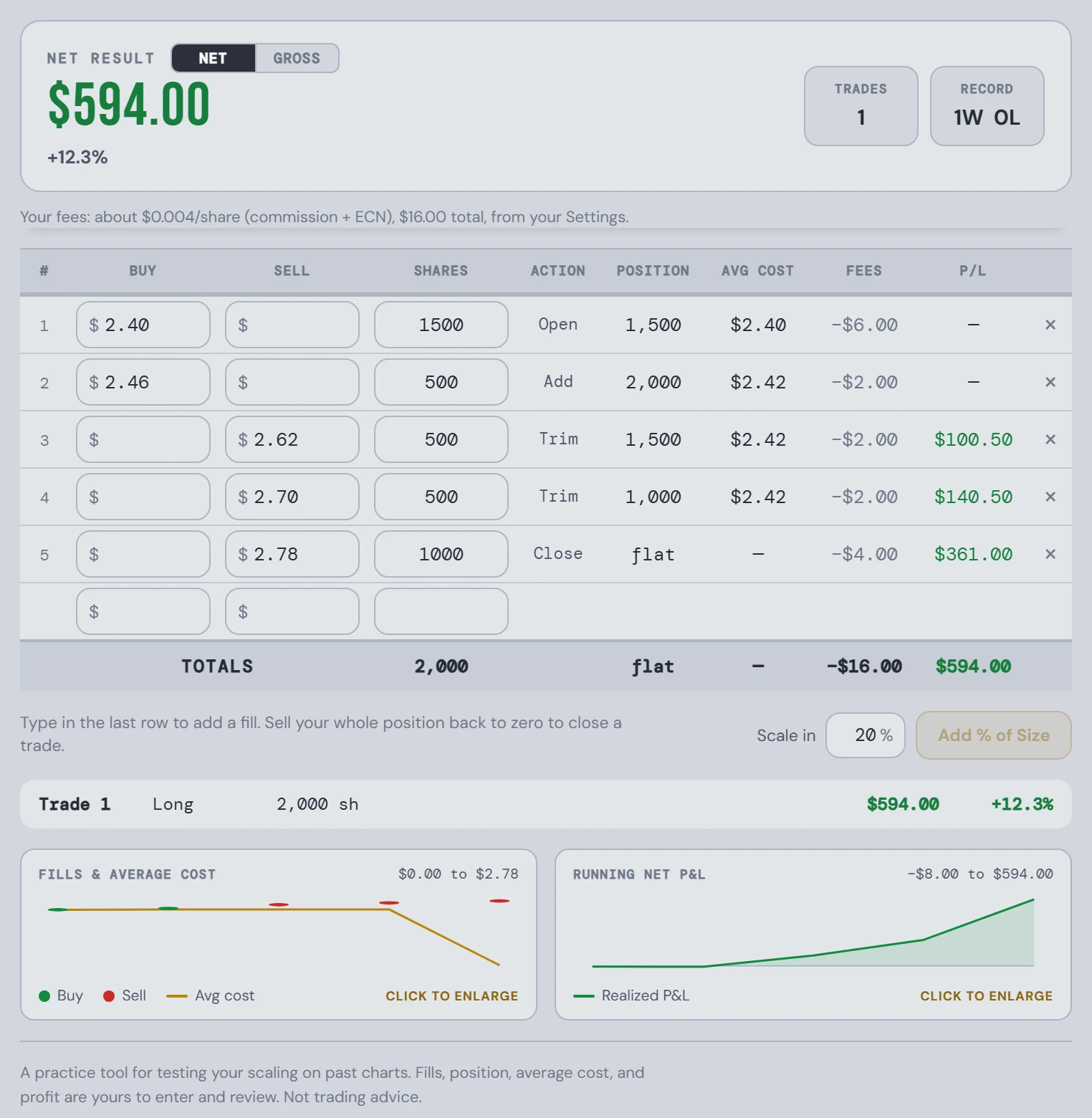
- Practice before you pay for the lesson. A free day trading simulator teaches the buttons and nothing about how a real loss feels, so use it for the buttons. MAKETZO's free replay tool lets you enter the fills you would have made on any past chart.
- Open the account the rules allow. A cash account has no day trading minimum, so even $100 opens the door. Your limit is then the settlement clock: buy with unsettled proceeds, sell before they settle, and you have a good-faith violation that can restrict the account. Count spread and fees on every trade, because they take a bigger slice of a small account than you expect. If you cannot follow your plan with $100, $25,000 will not help.
- Sign your rules before the open. MAKETZO's Morning Lock-In is where you sign the day's rules while you are calm, so the page on your desk has your name on it.
- Grade the doing, not the money. After every session, ask one question of every trade: did I follow the plan? MAKETZO imports your fills from DAS Trader, and its journal grades discipline on every trade, so a winner that broke your rules still gets marked down.
The plan an AI wrote you in a minute was right the day you printed it. The work is everything that happens after the first red trade.
So, with AI taking jobs, should you learn to day trade? Yes, as a skill you build on the side, with a paycheck still coming in and money you can afford to lose. No, as the way you cover next month's rent. AI made knowing free. The doing is still yours.