The Math Every Scalp Has to Clear
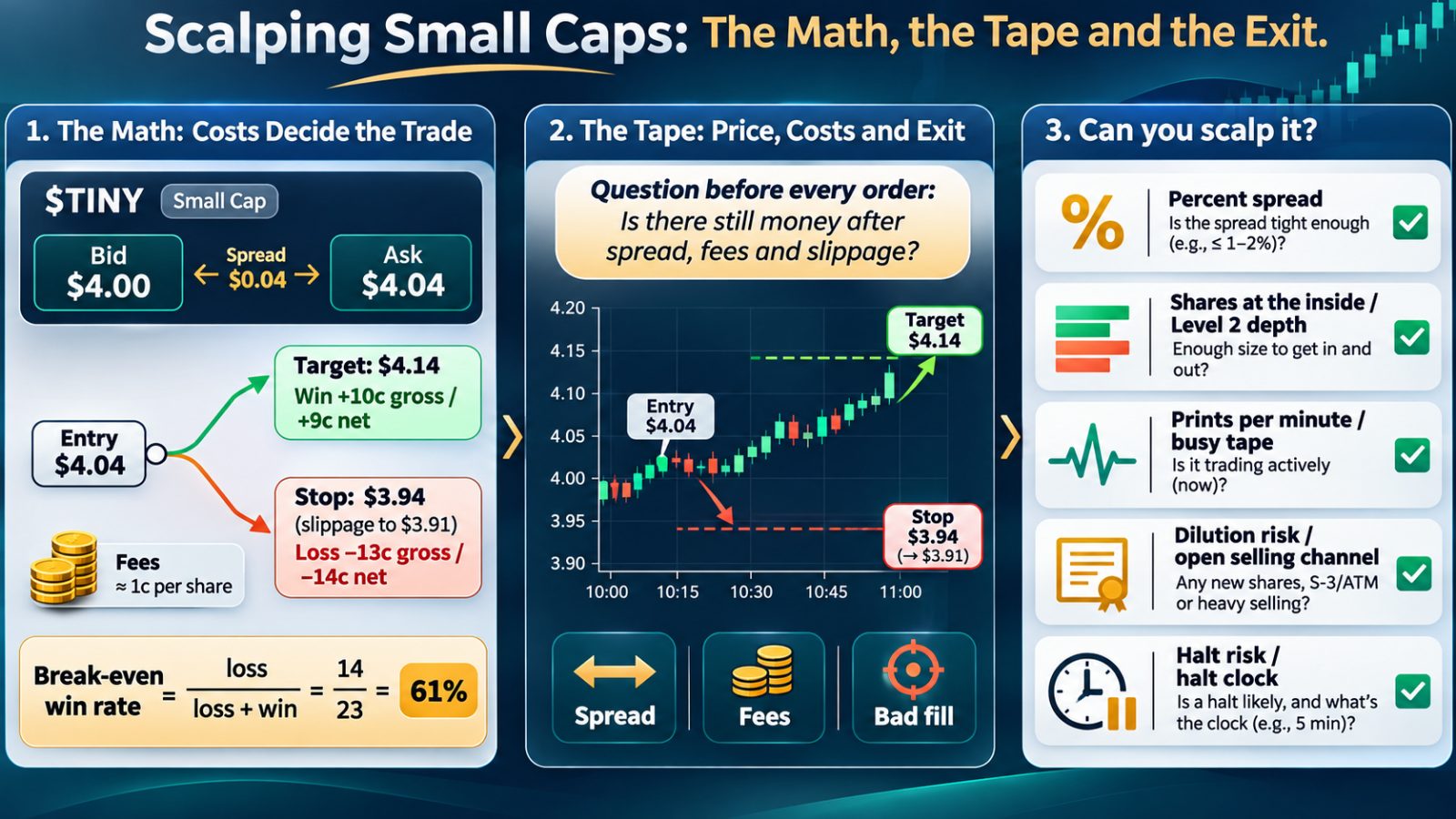
A scalp starts behind by the width of the spread, so work out what it has to win before you send it.
Take a stock with a $4.00 bid and a $4.04 offer, and a plan to make 10 cents or lose 10 cents. On paper that is an even bet. Here is what it costs.
- The entry. You buy the offer at $4.04. The bid is 4 cents under your fill before the stock trades again.
- The fees. Say commissions and routing come to 1 cent a share for the round trip, then replace that with the real figure from your statement. On a stock over $1, an exchange can charge up to 30 cents per 100 shares to take a displayed quote, and a cut to 10 cents is on hold until November 2027. The SEC fee on sales is $20.60 per million dollars.
- The win. You sell at $4.14. Ten cents gross, 9 cents net.
- The loss. Your stop order triggers at $3.94 and fills at $3.91 because the book is thin. Thirteen cents gross, 14 cents net.
Divide the net loss by the net loss plus the net win. Here that is 14 divided by 23, or 61%. A trade that looked even needs about six winners in ten just to come out flat, and that assumes the bad fill never gets worse than 3 cents.
Then divide the spread by your target. In this trade the spread is 40% of the 10 cents you hoped to make. Write your own ceiling for that number and pass on anything over it.
After the close, the honest number is cents per share: net profit divided by shares traded. A scalper can be green in dollars while cents per share slides toward zero, because the trade count is climbing and every extra trade pays the toll again. MAKETZO's reports show cents per share on every plan, alongside performance by price and by symbol, so you can see which names your scalps actually pay in.
Which Small Caps You Can Scalp
Can you get out in one or two prints? If the answer is no, the trade is not a scalp, whatever you call it. Check five things before you look at the chart.
- The spread as a percent of price. A cheap stock is no bargain on this test. A $0.80 stock with a 2-cent spread is 2.5% wide, ten times the 0.25% on a $12 stock with a 3-cent spread.
- The shares at the inside. Level 2 shows what is resting at each price. Compare the shares at the best bid with the shares you would need to sell. When your exit is bigger than what sits there, you become the slippage.
- The prints per minute. A scalp is measured in seconds, so the tape has to be busy. A stock that goes 20 seconds between prints cannot get you out on your schedule.
- Who can sell into the run. Run the ticker through Dilution Check, which reads a stock's SEC filings for dilution risk and tells you if a selling channel is open and when the company last used it. With an open channel, the company can be one of the sellers on the offer your scalp is trying to get through.
- How close it is to a halt. A stock running at its band can freeze in the middle of your trade, and during a halt a stop order has nothing to trigger against. MAKETZO's Halt Clock estimates the reopen if you get caught in one.
Scalping Strategies That Read the Tape
Believe the prints over the quotes. The book shows what traders say they will do, and the tape shows what they did.
Three setups cover most of what a small cap scalper does.
- The break of a level. Price has failed at the same offer twice. Now the offers at that price vanish as buyers lift them, and prints speed up on real share counts. You want in as it trades through. You are wrong if the next prints fall back under the level, so you exit there with no debate.
- Absorption at a level. Heavy selling hits the bid and the price refuses to drop. Someone large is buying what is offered. You are wrong the moment that bid gives way.
- The range between two prices. Buying near the bid and selling near the offer works in deep stocks with penny spreads and a quiet tape. On a small cap with a 4-cent spread, it gets a scalper run over when the range breaks, so treat this one as a large cap habit.
A big resting bid is a clue and never a floor. It can be pulled the moment price gets close, and an iceberg order can show only a sliver of what is really there. If price reaches it and it survives on the tape, then it was real.
Short scalps carry two more costs. Borrowing a hard-to-borrow small cap can cost more per share than the scalp is worth, and once a stock falls 10% from the prior close, Rule 201 restricts short sales to prices over the national best bid for the rest of that day and the next.
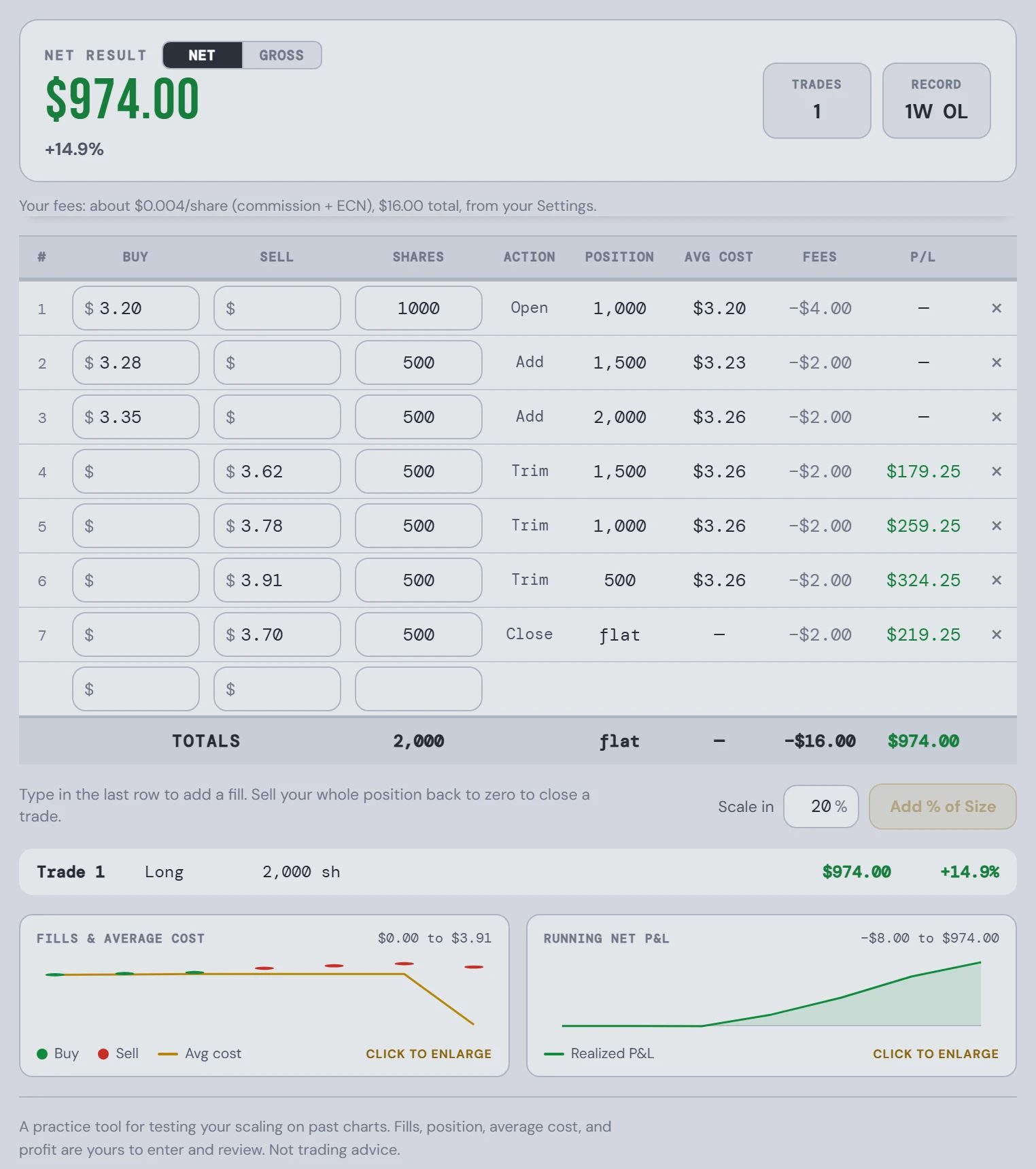
Rehearse a setup before you pay for the fills. Trade Replay lets you pull up any past chart, enter the buys and sells you would have made, long or short, and see whether they paid. It is free, needs no account and gives you 10 replays.
Order Types for Scalping
Decide before you send: do you need to be out for sure, or do you need to control the price? No order gives you both.
- Market order. Fills now at whatever is resting. Fine in a deep stock. In a thin one it sweeps through every offer until it is full.
- Marketable limit. A limit at or just through the offer. It fills fast and caps the worst price you will pay, which is why it suits a thin book.
- Stop-market. Turns into a market order when triggered. You are out, at a price nobody can promise. On a low float name that can flush, a stop that might not fill is no protection.
- Stop-limit. Turns into a limit order when triggered. In a fast drop the price blows past your limit, the order does not fill, and you still own the trade.
Load the order you chose onto a hotkey before the open, because there is no time to pick one at 9:41.
Exit a thin name in pieces, into buyers, while the prints are still fast. Dumping the whole trade at market walks the bid down through empty levels, and you pay for every one of them.
When to Scalp and When to Sit Out
Scalps pay when volume does, so when the prints slow down, you slow down.
- The open. The heaviest volume, the biggest moves and the most noise, all in the same stretch of the day.
- Midday. Volume thins and price chops. The setups get worse and the urge to trade does not, which is where a good morning gets given back.
- The last hour. Volume and volatility pick back up as the day's trades get closed out.
- Before the bell. Run the spread math before you trade the premarket, when quotes are thin and the spread can eat most of a 10-cent target.
When a group of stocks is running, scalp the leader, the one making new highs. A weak name running only in sympathy fades first, and it fades while you are still waiting for your exit.
How Scalpers Give It All Back
The 14th trade of the morning is almost never the best one. It is usually the one you took because the screen was open.
Every extra trade pays the spread and the fees again, and every pointless click takes a little attention away from the trade that matters. The damage rarely looks dramatic. It shows up as a trade count climbing while cents per share falls, often on green days.
More trades do not teach you to trade better. In a study of people who started day trading Brazilian equity futures and kept at it for at least 300 days, 97% lost money, and the authors found no evidence of learning by day trading. Those traders were in futures and not small caps, and the finding still answers the idea that repetition alone builds skill.
Write rules you can answer yes or no before the open.
- I know the break-even win rate of this setup.
- The spread is inside my written ceiling.
- After a stop-out I wait for a new setup and do not re-enter the same stock at a worse price.
- I have a maximum trade count for the morning, and when I reach it I am done.
- When the tape goes quiet, I go quiet too.
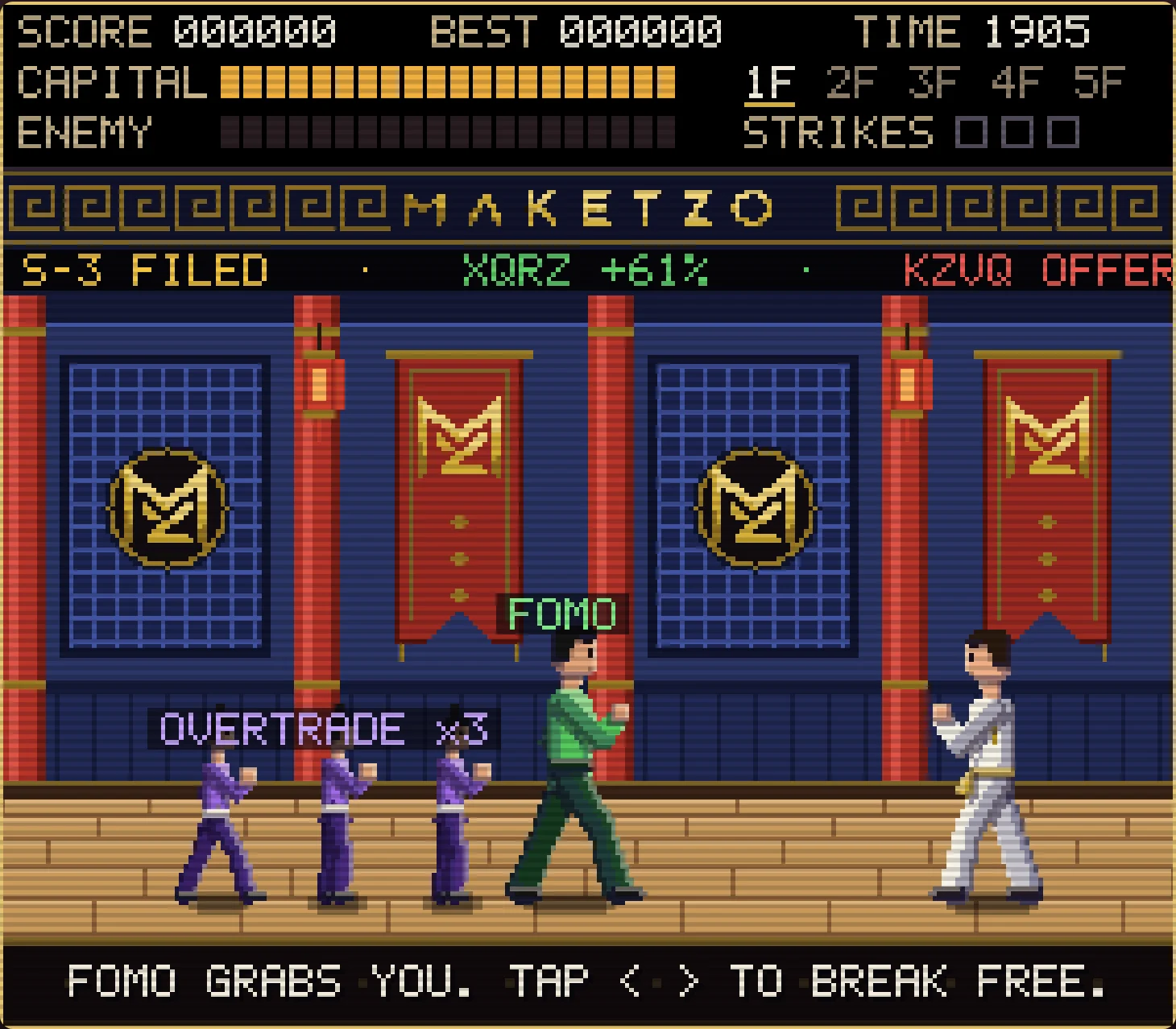
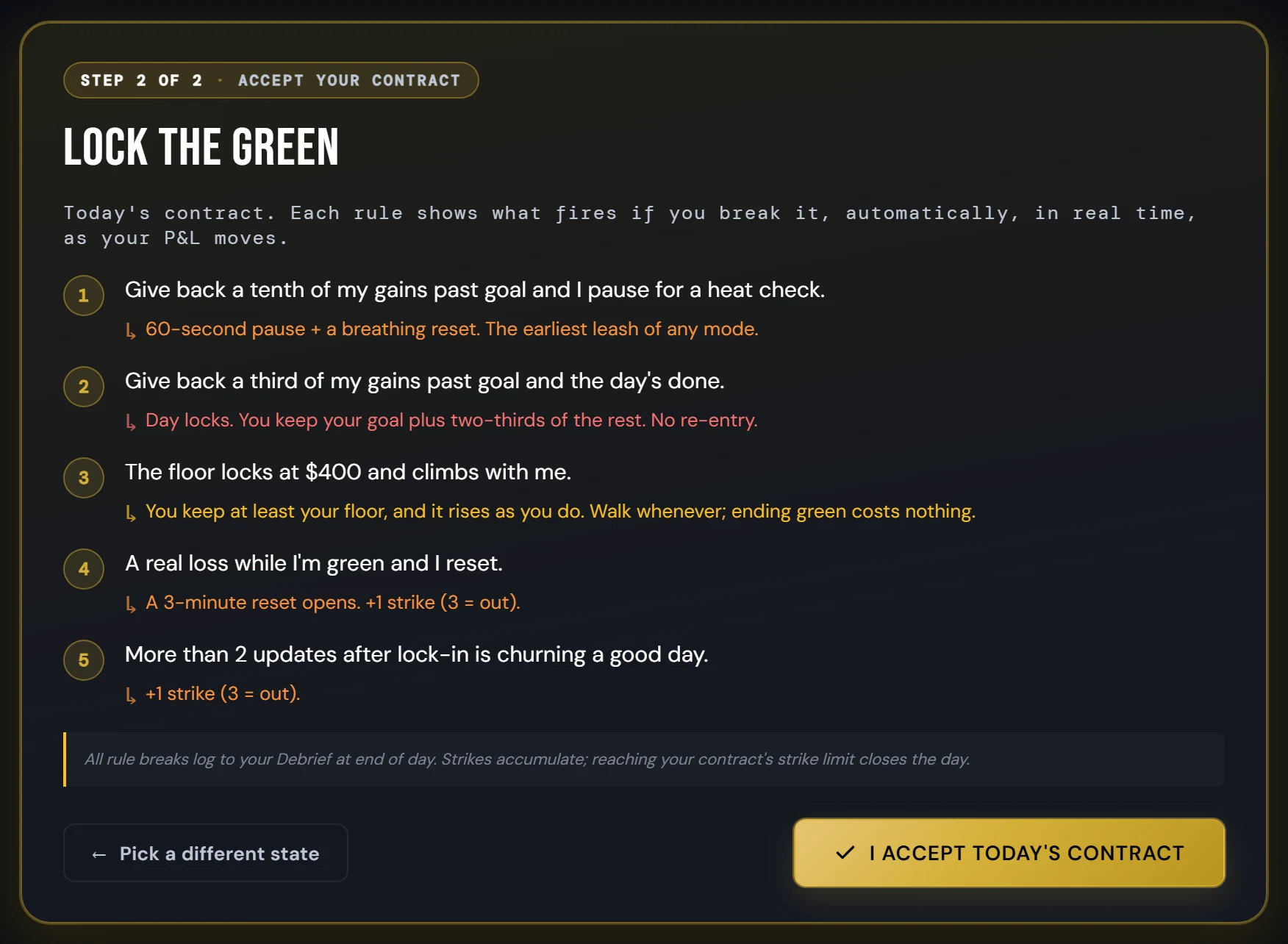
At 9:41 those rules are easy to forget, and that is the gap MAKETZO, a trading discipline system for small cap day traders, exists to close. You commit to your rules with the Morning Lock-In, and a contract such as A+ Only Day makes "no setup, no trade" a rule, with two strikes ending the day. COACH SAYS catches the urge to re-enter after a loss or chase a runner in real time. The Focus Room is where you reset before the next order, and the Waiting Room gives you something to do when nothing is there. The journal grades discipline on every trade, so you can see whether the scalps you regret broke a rule you wrote.
If you trade on DAS Trader, MAKETZO imports those trades, and DAS Trader is the only import it takes. Teaching and accountability are MAKETZO's job, and stock picks and financial advice are never part of it. Plans and the 7-day free trial are on the pricing page.
Scalping fast small caps is one of the hardest ways to trade, and the arithmetic is against you from the first order. Nothing here is a suggestion to scalp or financial advice, and your decisions are your own.
Common Questions
Is scalping profitable?
For a small number of traders, and the arithmetic is against the rest. Spread, fees and slippage come out of every trade, so a scalper needs a win rate well over half on a plan that looks even on paper. The test is your own record: net cents per share across a large sample of your trades. If that number stays positive after every cost, your scalping is paying. If it only looks good before costs, it is not.
Is scalping illegal?
Scalping as a trading style is legal. The word has a second meaning in securities law that is not: buying a stock, recommending it to other people without saying so, and selling as they buy. In SEC v. Capital Gains Research Bureau, the Supreme Court ruled in 1963 that an adviser has to disclose that practice to clients, and regulators have since gone after social media promoters for the same pattern. When someone is touting a small cap, ask who is selling to the people listening.
How much money do you need to scalp stocks?
No rule sets a scalping minimum, and the old $25,000 day trading floor is gone. FINRA replaced the pattern day trader rules with intraday margin requirements on June 4, 2026, and brokerage firms have until October 20, 2027 to switch, so ask which rules your broker runs today. Trading on margin still takes $2,000 in equity, and repeated intraday margin deficits can get an account restricted for up to 90 days. The harder limit is cost, because a minimum commission takes a bigger share of every gain in a small account.