The Bell Is an Exit Door
For a lot of people who bought before the open, the bell is the way out, not the way in.
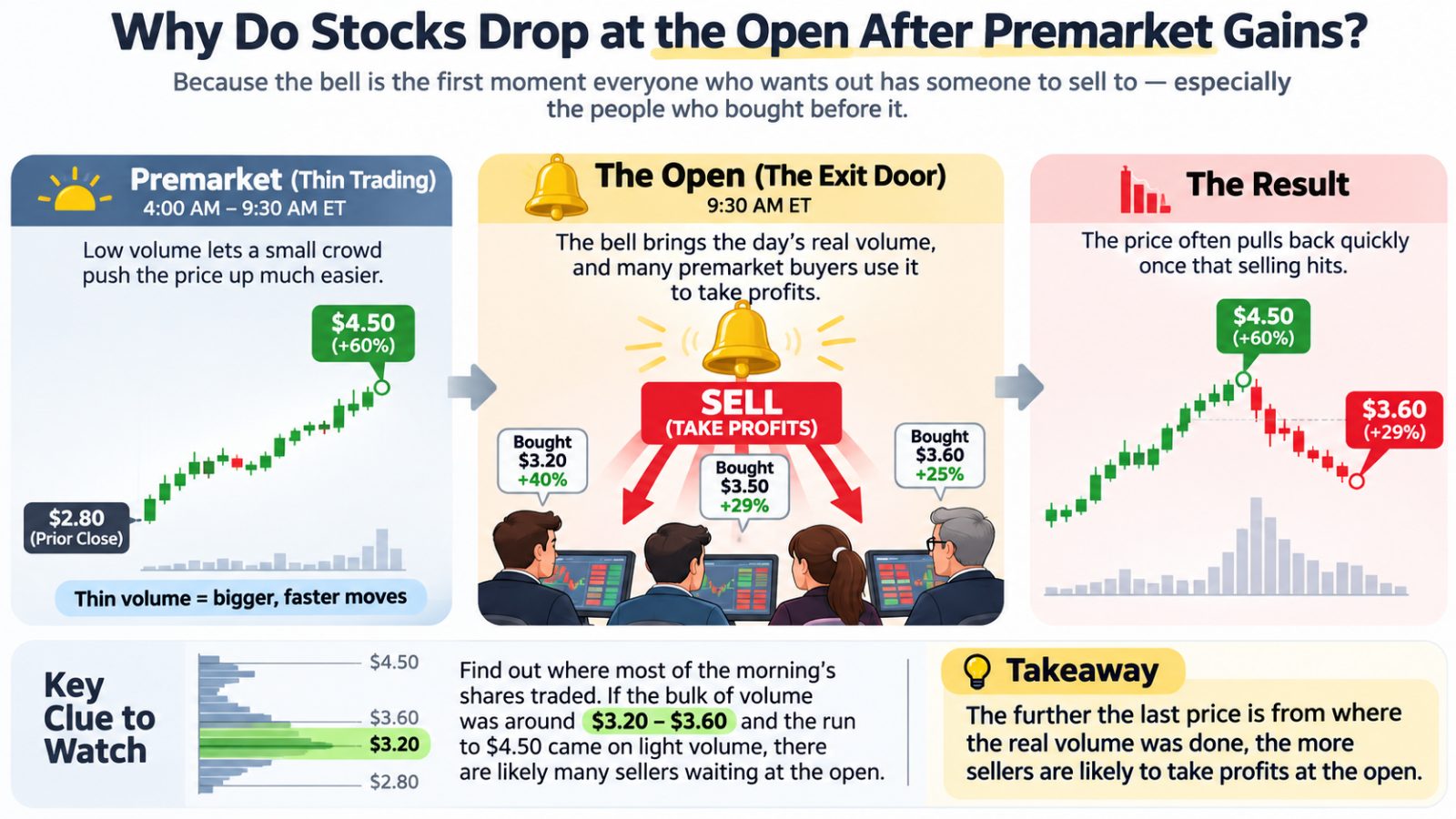
Picture a small cap that closed yesterday at $2.80 and is printing $4.50 before the bell, up about 60 percent on a news release. No such stock exists, and you have watched it a hundred times. Ten minutes into the session it is $3.60, and the people who paid the high are asking what happened.
Five sellers happened. The first one bought at $3.20 around dawn and is up 40 percent, with a problem: the gain is on a screen, and the bid behind it is a few hundred shares deep. Selling into that would knock the price down on every fill. Premarket trading runs on electronic systems from as early as 4:00 AM ET, mostly on limit orders, with a fraction of the day's crowd. That trader needs what everyone in a thin stock needs, which is more people, and the open brings the heaviest volume of the day.
So before the bell, find out where the morning's shares traded. If most of the volume was done around $3.20 to $3.60 and the run to $4.50 came on a trickle, most of the morning's buyers have a profit and a reason to take it. The further the last price sits from where the real volume was done, the more sellers are waiting.
The Holder Who Slept Through the Gap
Some of the sell orders at the open come from people who have not looked at a chart in a week.
Yesterday's holder wakes up to a 60 percent gain, and plenty of them never trade before the bell. Their broker's extended session starts late, or a limit order has to be marked for that session or it waits for the regular one, or the order goes straight into the opening auction. Either way, a decision made over coffee reaches the market at the same moment as everyone else's.
That pile of orders explains the first print. On a Nasdaq-listed stock the official open comes from the Opening Cross, which picks the price that executes the most shares. That price owes nothing to the last premarket trade, so a stock last seen at $4.50 can open at $4.10 and leave a premarket buyer under water in the first second.
Let the auction finish. Buying the first print means taking the other side of every order that piled up before the bell.
The Short Seller Who Needed a Crowd
A short seller wants exactly what the premarket buyer wants: volume to trade against.
Shorting a thin stock before the bell is how people get run over, so many wait for the open, when there is enough activity to get in and back out. The premarket high hands them a clean line to lean on. If the stock opens beneath it and cannot get back over, their risk is clear and the trade is obvious.
Mark the premarket high before the bell, and watch it for the first few minutes. A stock that opens under that line and fails to reclaim it is telling you which side is in control.
The Only Seller Who Can Make More Shares
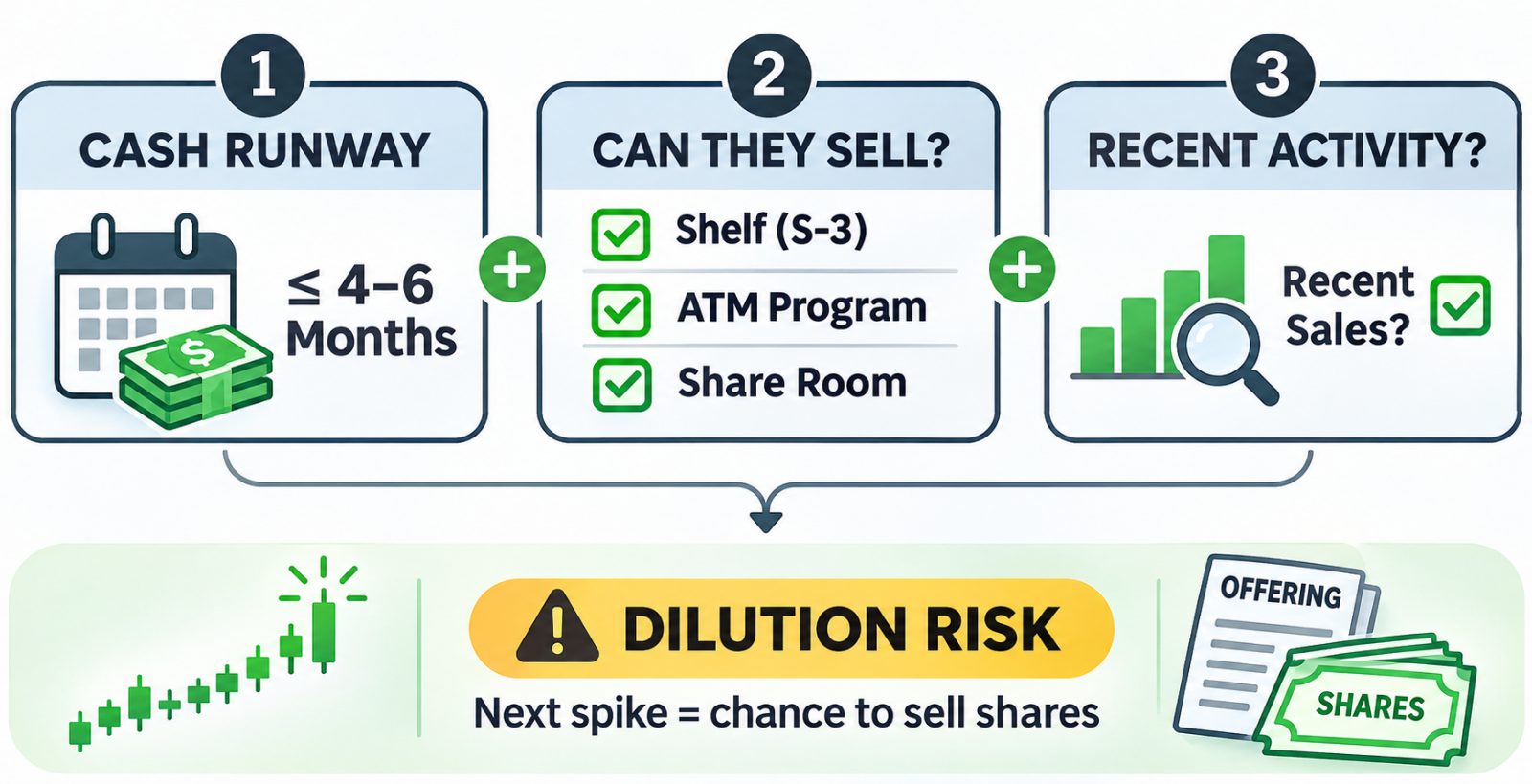
Every other seller can only sell what already exists. The company can issue more.
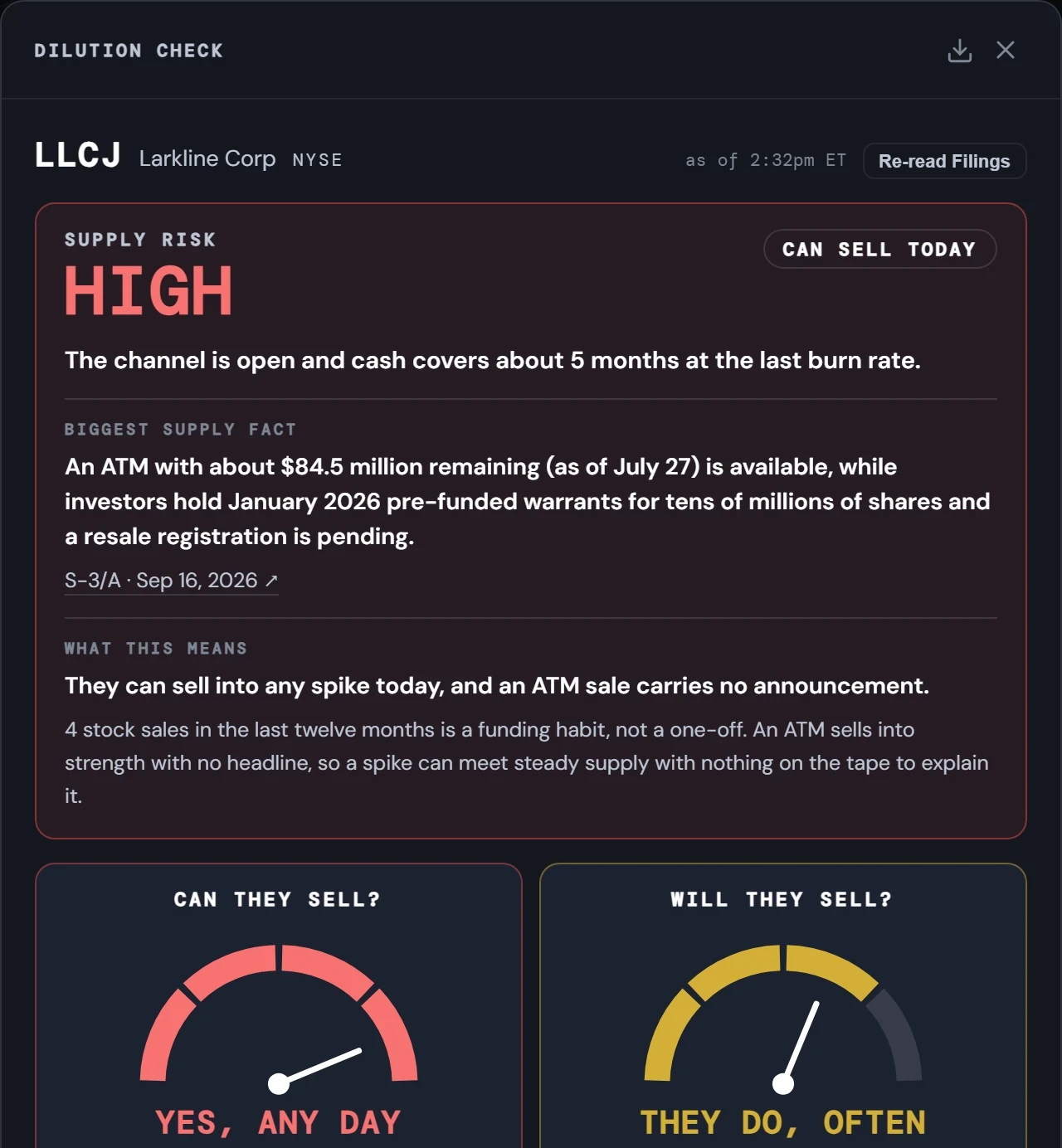
An at-the-market program lets a company sell new stock into the market at the going price, and a program like that needs volume to hide in. A 60 percent gap with the open's crowd behind it may be the best market that company has seen all year. Holders run out of shares. A company with an open channel keeps selling until the program is used up.
Before you trust a gap, run the ticker through Dilution Check. It reads the company's SEC filings and shows whether a selling channel is open and how recently the company used it. It knows only what has been filed, so compare the newest date on the card with the morning's news. A deal struck overnight may not be on it yet.
The Seller Who Never Decided
A stop order is a sell order someone wrote before they knew what the open would look like.
At many brokers a stop does not run before the bell, so stops that sat idle all morning can start working together at the open. The first drop through an obvious level turns them into market sells, those sells knock the price to the next cluster, and a stock can lose 10 percent without one person changing their mind.
If your stop sits exactly where everyone's does, you are one of those sellers. Before the open, find out whether your broker runs stops at that hour, and if it does not, know how you would get out by hand.
Is It Smart to Buy Premarket?
Own it before the bell and you quit reading the open and start defending your entry.
All five sellers show up at the bell. What you cannot know ahead of time is whether buyers show up with them. Some mornings they do: the stock holds over its opening print and its premarket range on heavy volume, every dip gets bought and the sellers run out of shares. That is a gap and go. Other mornings it loses those levels and rolls toward the prior close, and a gap lost in the first minutes often fills the whole way.
A trader who is flat at the bell can read either one. A trader who paid $4.40 can only root for one, and that is the real cost of buying early, more than the spread. You spend the most informative minutes of the day defending a decision you made in the thinnest market of the day.
If you do buy before the bell, earn it first:
- Name the reason in one sentence, and check it against the filing or the release itself.
- Set your price before you send the order. Use a limit, decide what proves you wrong, and know how you would get out at that hour.
- Count it as your first trade of the day, because your account will.
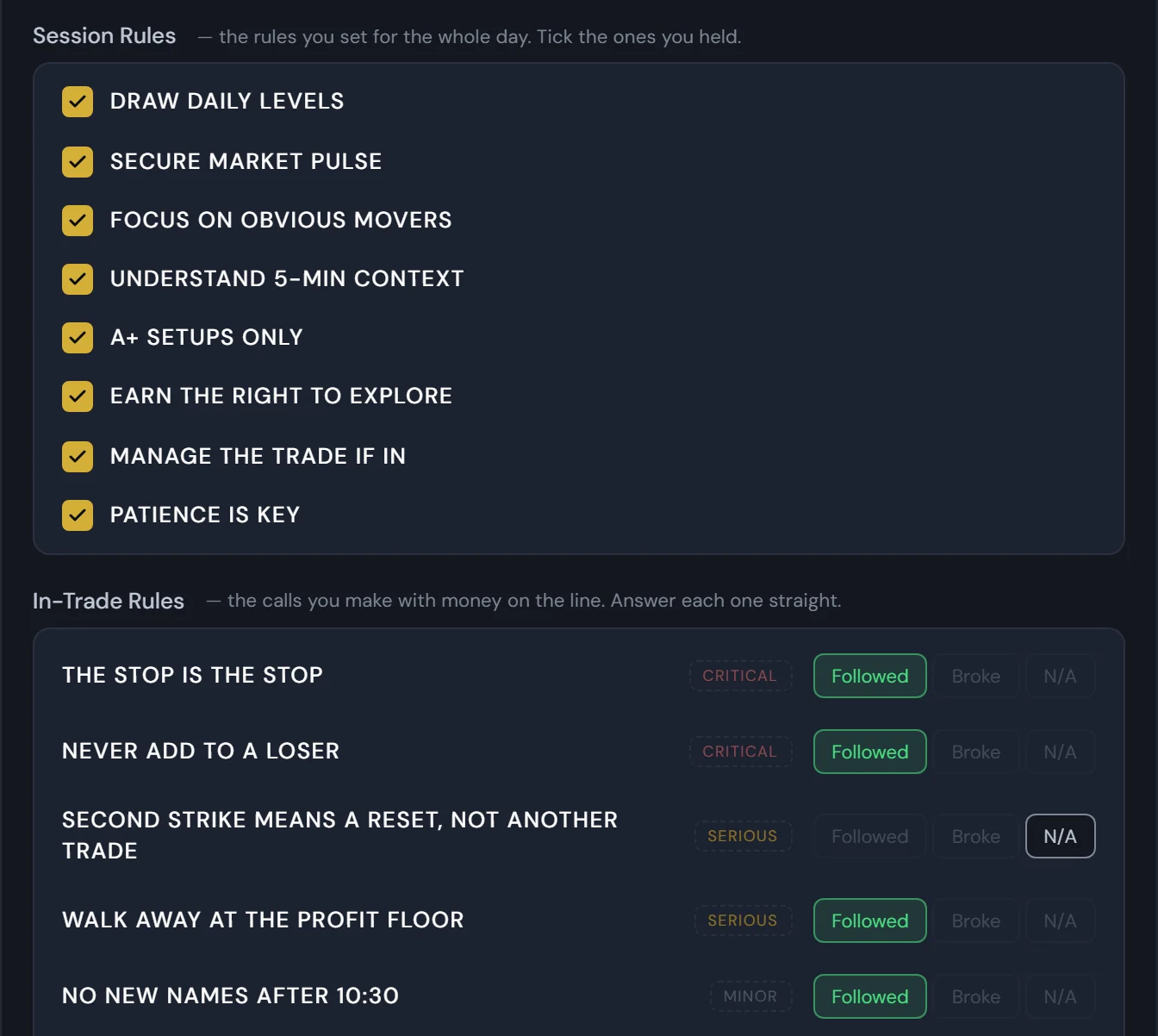
The hours, order rules and halts behind all of this are in the full walk-through of trading in premarket, and they are worth checking against your own broker before that first order. MAKETZO's Morning Lock-In is where you sign the day's rules before any of this starts, COACH SAYS speaks up in real time when you drift from them, and the journal grades discipline on every trade, so you can see what your mornings really do to you.
So why did that stock drop at the open? Because the bell is the first moment everyone who wanted out had someone to sell to, and that someone was the trader who bought the high. Is buying premarket smart? Only with a reason you can name and an exit you can use. Otherwise let the five sellers meet the buyers without you, and trade whoever wins.